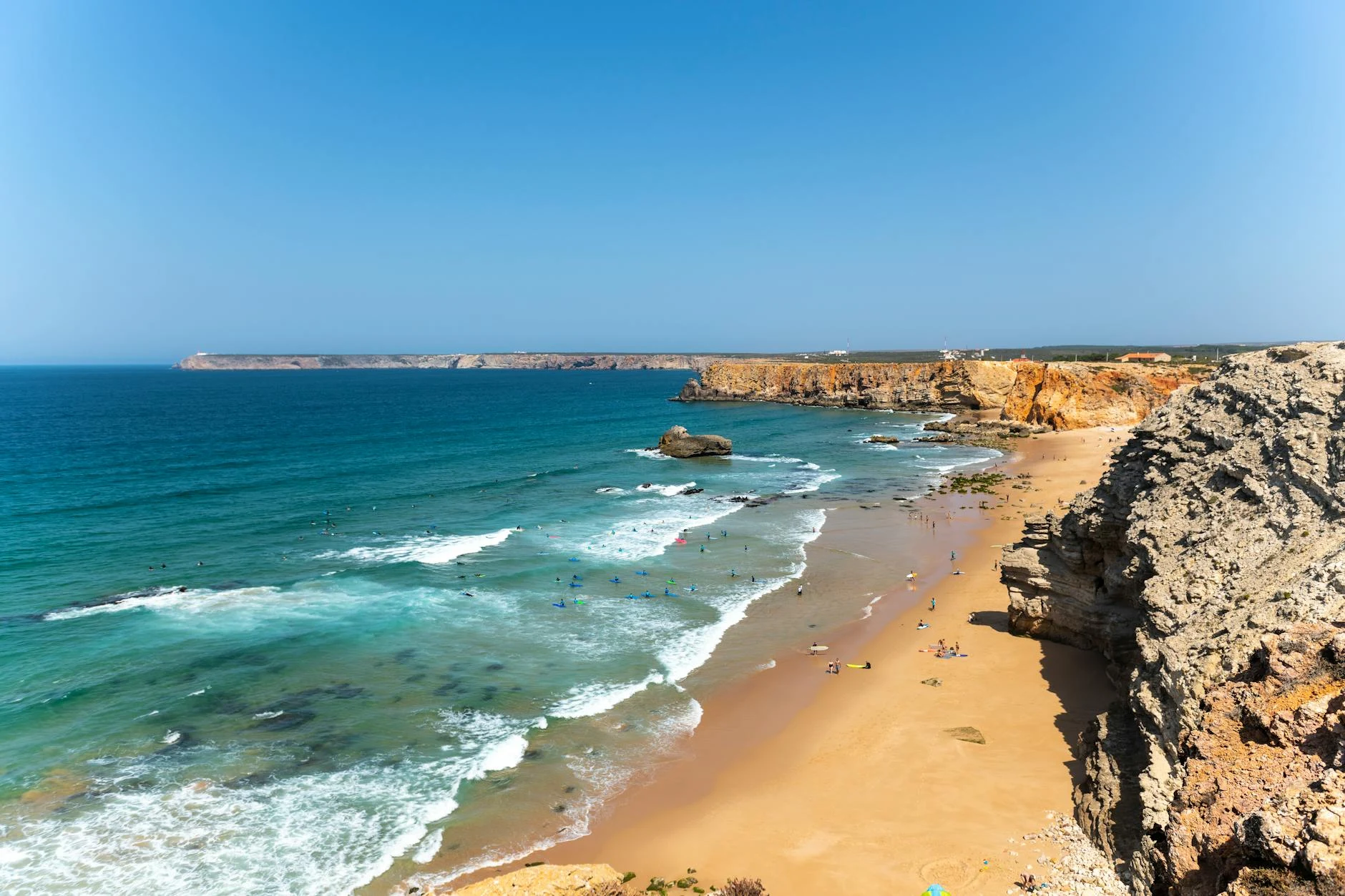
Praia da Mareta is the largest and most sheltered beach in Sagres, stretching roughly 700 metres in a south-facing bay flanked by limestone cliffs. Its calm water and proximity to the town centre make it the best option for swimming in an area better known for surf and wind.
Why This Beach
Praia da Mareta solves a problem that catches visitors to Sagres off guard: where do you actually swim? The town is famous for its windswept cliffs and surf breaks, but most of its beaches face the open Atlantic and come with rough water and the kind of wind that sandblasts your lunch. Mareta faces south. The limestone cliffs on each side break the wind and the swell, leaving a 700-metre stretch of golden sand with water calm enough for children to wade in.
The Fortaleza de Sagres sits on the headland above the western end of the beach, which gives Mareta a backdrop that most town beaches can’t compete with. Restaurants line the sand. The town is a five-minute walk uphill, and the whole thing feels like a different microclimate from the exposed coast just around the corner. It is not a wild or dramatic beach in the way Praia do Tonel is. That is precisely the point. After a morning at Cape St. Vincent watching waves explode against the cliffs, Mareta is the place where you can actually get in the water.
How to Get There
From Sagres town centre, walk toward the Fortaleza de Sagres on the N268. At the final roundabout, the large car park for Mareta is on the left, overlooking the bay. The beach is below, reached by a short paved path. Coming back up is steeper than it looks, worth knowing if you’re loaded down with beach gear.
By car from Faro Airport, Sagres is roughly 1 hour 30 minutes via the A22 motorway and then the N125/N268 through Lagos and Vila do Bispo. From Lagos, the drive takes about 35 minutes. There is a bus service connecting Lagos to Sagres, though frequency is limited and schedules change seasonally. A rental car makes the western Algarve dramatically easier.
Parking is free in the clifftop car park. In July and August it fills by early afternoon, but Sagres doesn’t suffer the parking chaos of Lagos or Albufeira. Arriving before midday is almost always enough.
What to Bring and What to Know
The water at Mareta is cold. This is the southwestern tip of Europe, and even in August, sea temperatures hover around 18-19°C, a few degrees below the south coast average. Swimmable, but not the warm bath you might expect from an Algarve beach. The water is calmer than the west coast beaches, though, and the gradual slope means you can ease in rather than committing all at once.
Bring sun protection and water. There are restaurants on the sand, so you won’t go hungry, but the beach faces south and catches sun all day with limited natural shade. Some small stones and fallen rocks sit at the back of the beach and near the western cliffs. Water shoes are not essential but useful if you plan to explore the rock pools at the edges.
Watch for underwater rocks near the western end, particularly at low tide. The central and eastern stretches of the beach are cleaner sand underfoot. Lifeguards operate in summer months.
A geological curiosity sits near the beach entrance: the Pedra do Sal, a fossilised coral reef embedded in the limestone. The surrounding rocks contain Jurassic trace fossils. Most people walk right past it. Worth a look if you have any interest in what this coastline looked like a few hundred million years ago.
Nearby Beaches
Praia do Tonel is on the opposite side of the Sagres headland, a 15-minute walk or 5-minute drive west. It faces the Atlantic directly and is Sagres’ main surf beach. Choose Tonel for waves and drama, Mareta for swimming and shelter.
Praia do Martinhal lies about a 10-minute drive east, a south-facing beach popular with families and windsurfers, backed by a resort. Calmer than Tonel but a bit more exposed than Mareta, and further from the town centre.
Praia do Beliche, 3km northwest on the road to Cape St. Vincent, is a small cliff-backed cove reached by a steep staircase. Sheltered, beautiful, and usually quieter than Mareta. Good surf when conditions are right.
The eastern end of the beach is noticeably quieter, even in August. Walk past the main cluster of sunbeds and you'll have more space than you'd expect from Sagres' busiest beach.