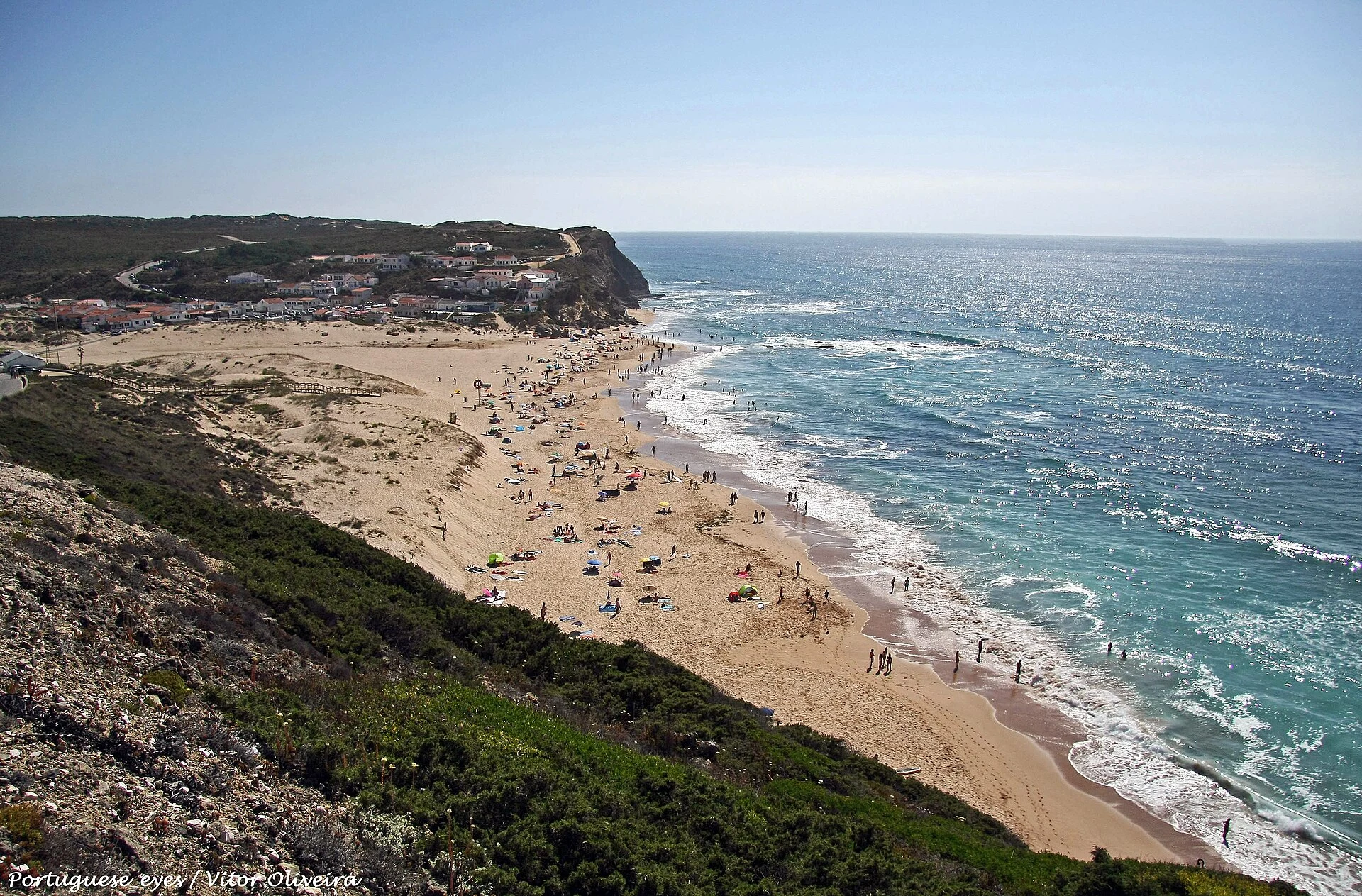
Praia de Monte Clérigo is a wide, west-facing beach about 10km from Aljezur on the Costa Vicentina. The beach stretches roughly 500 metres between cliffs, with extensive rock pools at the southern end and a shallow tidal lagoon that forms at low tide. It is popular with local families and surfers, and sits within the Southwest Alentejo and Vicentine Coast Natural Park.
Why This Beach
Monte Clérigo is the Aljezur beach that works for everyone. Where Praia da Arrifana is primarily a surf destination and Praia da Bordeira demands a commitment to remoteness, Monte Clérigo sits in between: wild enough to feel like the Costa Vicentina, sheltered enough that families with young children come back year after year. The beach is wide and the sand is golden. Cliffs frame everything without boxing it in.
The southern end is what earns the loyalty. At low tide, a network of rock formations creates pools full of starfish and crabs. The occasional octopus, too. A shallow lagoon forms on the main beach where the water barely reaches an adult’s knees. Portuguese families from Aljezur and beyond treat this as their local beach for exactly this reason. Behind the sand, a small village of pink and white houses climbs the hillside, with a couple of restaurants that face the Atlantic. No resort infrastructure. No parasol concessions. Just a boardwalk, a car park, and a beach that the Vicentine Coast Natural Park has kept from changing much at all.
How to Get There
From Aljezur, follow signs toward Vale da Telha and then Monte Clérigo. The road takes about 10 minutes and ends at the beach. From Faro Airport, the drive is roughly 1 hour 15 minutes: west on the A22 or N125 to Lagos, then north on the N120.
Parking is free. The lower car park sits directly behind the beach but holds maybe 30 cars (being generous). In July and August it fills before mid-morning. Overflow parking along the road and in the village above is less convenient but rarely full. The wooden boardwalk from the car park to the sand is flat and ramped, manageable with a pushchair or wheelchair.
Public transport is limited. Local bus connections run between Aljezur and Monte Clérigo, but the schedule is thin enough that a car is the realistic option.
What to Bring and What to Know
Bring your own shade. There are no parasol or sun lounger rentals here, and the beach has no natural shade once the sun is overhead. A windbreak is worth packing too. This is the west coast, and the wind can turn an otherwise perfect beach day into an exercise in sand-blasting (the cliffs offer some protection, but not always enough).
The water is cold. Cooler than the south coast by 2-3°C, which means even in August it takes some resolve. Surfers wear wetsuits year-round, and casual swimmers will be more comfortable in July and August than at any other time. A surf school operates during summer for lessons and equipment rental.
Water shoes are useful on the southern rock-pool section, where the footing between formations gets slippery. The marine life is genuinely impressive: starfish, sea anemones, small crabs, and juvenile fish in the deeper pools. Keep an eye on the tide if exploring, as incoming water can cut off routes back to the main beach.
Restaurants at beach level serve straightforward seafood and grilled fish. Check locally for current names and seasonal opening status. Bring cash as a precaution.
One safety note that matters: the currents here change frequently and there is a notable undertow close to shore. Lifeguards patrol from July through September. Outside those months, or when the red flag is flying, respect the water.
Nearby Beaches
Praia da Arrifana is about 15 minutes south by car and sits in a dramatic half-moon bay below the ruins of an Arab fort. A better choice if surfing is the priority, with more consistent wave quality and a dedicated surf culture.
Praia da Bordeira is roughly 25 minutes south and feels like a different scale entirely: a vast, wind-exposed expanse with a river crossing to reach the main sand. The river creates warm, shallow pools similar to Monte Clérigo’s lagoon, but the beach itself is more remote and less serviced.
Praia da Amoreira is the closest neighbour, a 15-minute walk north along the clifftop path (or under 5 minutes by car). The Aljezur river meets the sea here, creating a lagoon-like setting that attracts a slightly different crowd, more focused on the river swimming than the ocean.
Visit at low tide. The beach doubles in usable width, the rock pools on the southern end come alive with starfish and crabs, and a shallow lagoon forms on the sand where small children can wade safely.