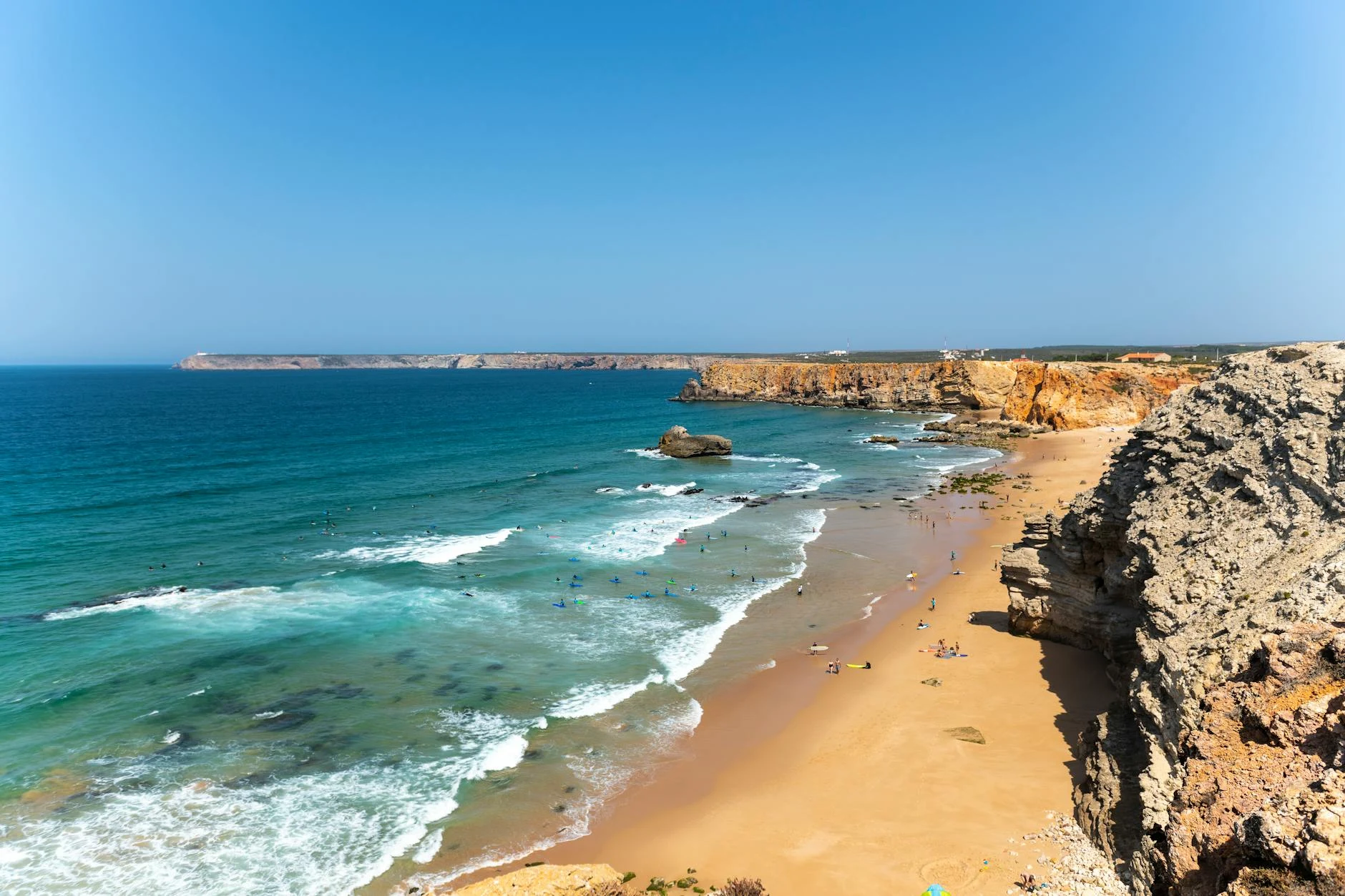
Meia Praia is a 4.5-kilometre stretch of golden sand on the eastern side of Lagos, making it one of the longest beaches in the Algarve. Protected by the Ponta da Piedade headland, the water is calm and shallow with a gradual entry, and the sheer size of the beach means it rarely feels crowded even in peak summer.
Why This Beach
Meia Praia is the opposite of what most people picture when they think of Lagos beaches. No dramatic cliff-framed coves. No steep staircases down to a pocket of sand. Instead: 4.5 kilometres of wide, flat, uninterrupted golden beach curving around the bay, backed by low dunes and the faint sound of trains on the tracks behind them.
The name translates to “half beach,” a reference to the original continuous sand that once ran all the way from Lagos to Alvor before the Odiáxere river split it. The western end, closest to the marina, goes by Praia de São Roque. Walk far enough east and you reach Praia do Vale da Lama, where an oyster farm sits in the shallow waters of the Ria de Alvor estuary. Technically all the same beach. The Ponta da Piedade headland shelters the bay from the worst of the Atlantic swell, which is why the water here stays calmer than on the more exposed west coast beaches. No rocks underfoot, either. The bottom is pure sand with a gentle slope, and you can wade out a surprisingly long way before the water reaches your chest. Cold, though. The Atlantic does not care that it is July.
This is the beach for people who want space and options rather than scenery. Families with small children who need safe shallow water. Runners who want a firm, flat 10km round trip along the tideline. Kitesurfers heading to the eastern end where the afternoon Nortada wind funnels reliably through from the northwest. And anyone who gets twitchy in crowded cove beaches where you can hear six different conversations at once. The Palmares golf course sits just behind the dunes on the eastern stretch, which gives you an idea of the neighbourhood.
How to Get There
The most direct route on foot starts at Avenida dos Descobrimentos in Lagos centre. Cross the pedestrian footbridge to the marina side, walk through (or past) the marina, and continue east. About 20 minutes total to reach the sand at São Roque. In summer, a seasonal ferry service crosses the river channel near the marina for a small fare, saving you the loop over the bridge. Check locally for current schedule and availability.
Bus route 2 runs a circular loop through Lagos that includes a Meia Praia stop, with roughly hourly service. The service is less reliable on weekends.
There is a train station called Meia Praia, one stop east of Lagos station, which puts you at the quieter middle section of the beach. The ride takes four minutes. The catch: trains run only about six times per day with gaps of over two hours between services, so it is a nice option if the timing works but not something to plan around.
By car, the M534 road runs behind the beach from the marina area eastward. Four separate parking areas sit along this road, each with a boardwalk crossing the railway tracks and dunes to the sand. All parking is free (as of 2026). The westernmost lots near São Roque fill earliest in summer. If you arrive after 10am on a July morning, skip these and drive further east. The lots near the middle and eastern sections of the beach rarely fill up.
What to Bring and What to Know
Wind. This is the thing that catches people off guard. Unlike the sheltered cove beaches around Ponta da Piedade, Meia Praia sits behind low dunes with no cliff walls to block the breeze. On calm mornings the beach is perfect, but the Nortada kicks in most summer afternoons, sometimes strongly enough to make sunbathing uncomfortable. Mornings are your friend if you just want to lie on the sand. The wind is the whole point if you are into kitesurfing or windsurfing.
There is almost no natural shade anywhere on the beach. Sun loungers and parasols are available for rent from the beach bars. Bring your own shade if you are heading to the quieter eastern sections where facilities thin out. The handful of restaurants and bars are concentrated along the western and middle parts of the beach. East of that, there is nothing. Pack water and snacks if you plan to walk the full length.
The beach holds Blue Flag status, so dogs are officially not allowed. In practice, plenty of people walk their dogs here, particularly early in the morning before the lifeguards are on duty. Bring a bag.
Water shoes are unnecessary. The sand is soft and the seabed is clean and rock-free. Snorkelling gear is a waste of luggage space here too: there is nothing to see underwater on a flat sandy bottom. Save it for Dona Ana or the coves further west.
One more thing: there is a ruined 17th-century fort sitting behind one of the parking areas, quietly crumbling into the dune grass. Worth a glance on the way to the sand, if only because almost nobody stops to look at it.
Nearby Beaches
Praia Dona Ana is the opposite experience: a compact, cliff-enclosed cove about 3km south of Lagos centre, with clear turquoise water and dramatic rock formations. Far more photogenic, far more crowded.
Praia do Camilo sits next to Dona Ana and is accessed by a famous steep staircase cut into the cliff. Beautiful but small, and brutally packed in summer. Go early or not at all.
Praia da Luz, further west along the coast, offers a more village-feel beach day with a good mix of sand and facilities. A calmer alternative to Lagos’s busier spots, particularly for families staying in that direction.
Walk 10 to 15 minutes east from São Roque and the crowd thins dramatically. Most visitors cluster near the western end close to the marina, leaving the middle and eastern sections of the beach wide open, even in August.