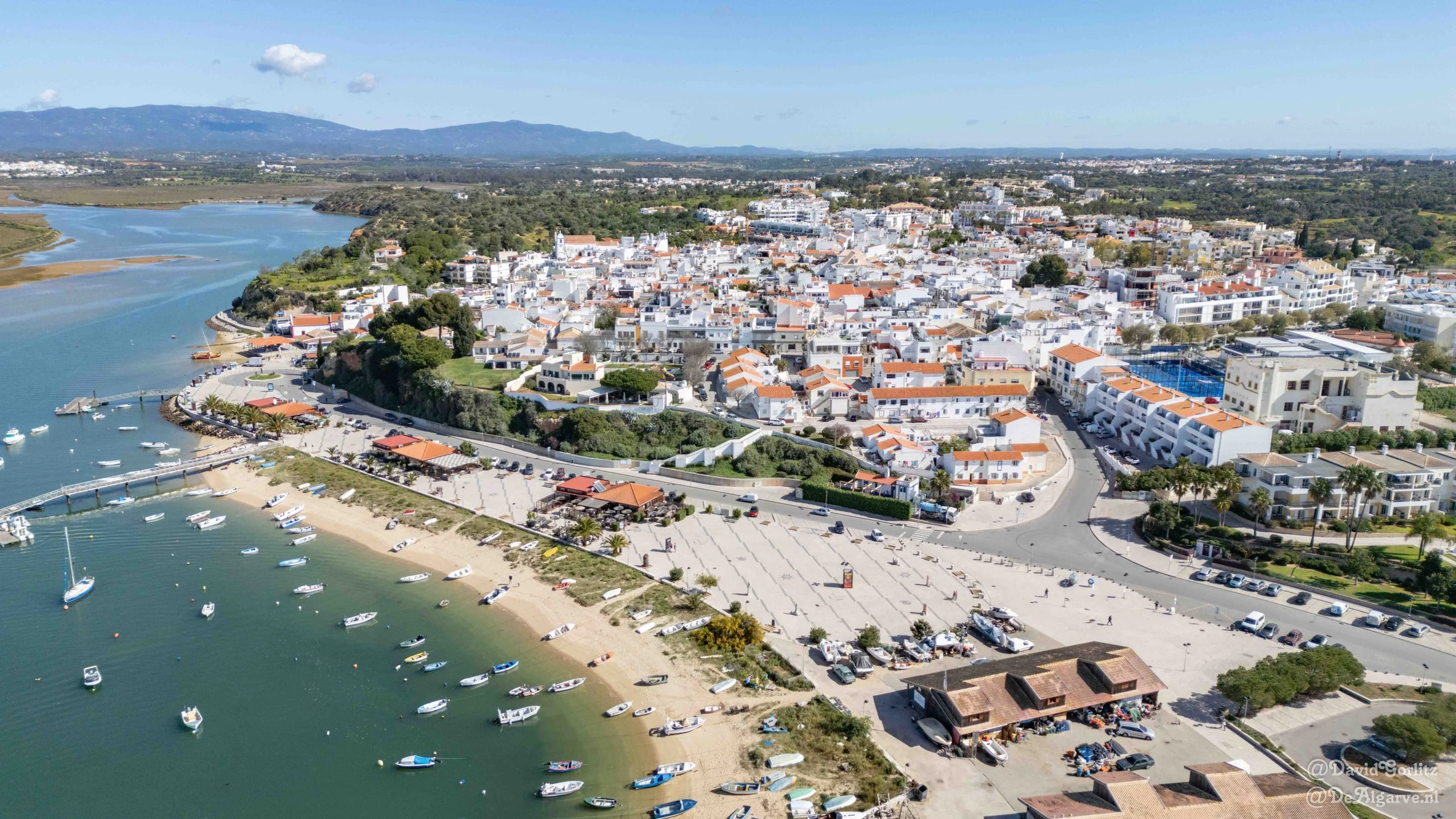
Alvor is a compact fishing village on the central-western Algarve coast, sitting on the Ria de Alvor estuary between Lagos and Portimão. The village appeals to couples, families, and anyone who wants good restaurants and a beautiful estuary setting without the scale or noise of the larger resort towns.
Why Visit Alvor
Alvor sits on the Ria de Alvor estuary, roughly halfway between Lagos and Portimão, and it benefits from both without trying to be either. Lagos has the history and the nightlife. Portimão has the urban infrastructure. Alvor has a harbour full of fishing boats, a tangle of narrow streets behind a whitewashed waterfront, and a restaurant scene that punches well above its size.
The estuary is what gives Alvor its character. The Ria de Alvor is a protected lagoon system stretching south of the village toward the coast, and the network of wooden boardwalks through the dunes and salt marshes is genuinely one of the best short walks in the Algarve. At low tide the mud flats come alive with wading birds and locals harvesting clams. The village itself is small enough to cover on foot in half an hour, but the combination of the estuary, the beach, and the food keeps people around for days.
Worth noting: Alvor has a resident British and northern European expat community, which means the restaurant and bar scene caters partly to that crowd. You’ll find a few pubs alongside the Portuguese tascas. That’s not necessarily a negative, but if you’re expecting a village untouched by tourism, recalibrate. Alvor is popular for good reason, and it wears it comfortably.
Best Things to Do in Alvor
Walk the Passadiços de Alvor
The boardwalk trail through the Ria de Alvor dunes is the single best reason to visit Alvor beyond the beach. The raised wooden walkway crosses salt marshes and dune systems, with the estuary on one side and the Atlantic on the other. It connects the harbour area to the coast, and the walk takes roughly 20-30 minutes at a relaxed pace. At low tide, the flats below the boardwalk are full of crabs, wading birds, and locals bent over rakes pulling clams from the sand. Best walked in the late afternoon when the light softens and the heat drops.
Igreja do Divino Salvador
The parish church of Alvor is the most architecturally significant building in the village. The main doorway is one of the finest examples of Manueline carving in the Algarve: six concentric archivolts decorated with botanical motifs, dragons, rope work, and what appear to be octopus tentacles on the outermost arch. The church dates from the early 16th century, though the 1755 earthquake forced extensive rebuilding. Inside, the original Manueline stone columns still divide the three naves, while the decoration shifted to Rococo during restoration. The high altar and baptismal font survived from the original church.
Not a long visit. Fifteen minutes covers it well, but the doorway alone is worth the detour.
Kayak or Paddleboard the Ria de Alvor
The estuary’s calm, shallow water makes it ideal for kayaking and stand-up paddleboarding. Several operators near the harbour rent equipment or run guided tours through the lagoon channels. The Ria de Alvor is a protected nature reserve and one of the more important wetland bird habitats on the Algarve coast. You don’t need experience; the water is flat and rarely above waist depth in most channels.
Ponta de João de Arens
The headland east of Praia de Alvor is easy to miss if you’re only focused on the main beach, but the forested trails and hidden cove beaches at the base of the cliffs are worth the effort. The sandstone formations here are impressive and the area sees far fewer visitors than the main beach. Access is by car or a longer walk along the coast from the eastern end of Praia de Alvor.
Alvor Harbour and Waterfront
The harbour is the social centre of the village. Fishing boats are still pulled up along the waterfront, and in the mornings you can watch the catch being landed and sorted. The old fish market building near Largo da Ribeira has been converted into a small cultural space with photographs documenting the village’s fishing heritage. A João Cutileiro sculpture of a fisherman stands nearby. The promenade south of the harbour runs along the estuary toward the boardwalk, and the string of restaurants and bars on the northern side fills up at sunset.
Best Beaches Near Alvor
Praia de Alvor is the main event: a long stretch of golden sand running from the estuary mouth toward Praia dos Três Irmãos to the east. The boardwalk approach through the dunes is part of the experience. The beach has two distinct characters. The estuary side is calmer and shallower, better for young children. The ocean side has proper Algarve beach conditions with more space.
Praia dos Três Irmãos sits at the eastern end of the same stretch, where the sand gives way to golden sandstone cliffs, rock formations, and small caves. It feels like a different beach entirely, and the walk along the shore to reach it is pleasant at low tide.
Praia da Rocha is a short drive east toward Portimão. Bigger, busier, more facilities, more nightlife. A different proposition entirely, but convenient if you want variety.
Where to Eat in Alvor
Alvor has more restaurants per square metre than any village this size has a right to. The waterfront strip along the harbour is the obvious draw, but the streets behind it, particularly Rua Dr. Frederico Ramos Mendes, are where many of the better places hide.
A Lota de Alvor, named after the old fish market, is one of the village’s most consistent restaurants. The charcoal-grilled fish of the day is the reason to go. No theatrics, just well-sourced fish cooked properly over coals. It books up fast in summer.
Zé Morgadinho operates out of a former fisherman’s house from 1890, facing the estuary. The razor clam rice (arroz de lingueirão) is excellent, and the fish stews are the kind of slow-cooked coastal cooking that Alvor does best. The interior feels like a time capsule of old Algarve.
Caniço is a different experience entirely. Accessed by a lift carved into the cliffs at Praia dos Três Irmãos, it sits above a secluded cove with Atlantic views from every table. The prices reflect the setting. Sunset cocktails here are hard to beat, and the seafood is strong enough to justify the premium. Not a casual Wednesday lunch spot. More of an occasion.
For something more straightforward, A Ribeira on Largo da Ribeira is a family-run waterfront restaurant with three generations in the fishing business. The food is uncomplicated: grilled fish, traditional stews, honest portions. The kind of place where you eat what the boats brought in that morning.
Skip the places with laminated menus and photos of the food outside. Walk one more street.
Where to Stay in Alvor
The village centre has a mix of small hotels and apartment rentals, mostly low-rise and in keeping with the village’s scale. Staying in the old town puts you within walking distance of the harbour, restaurants, and the boardwalk to the beach.
For more upmarket options, the area between Alvor and Praia dos Três Irmãos has several larger resort hotels, including the Pestana Alvor Praia and the Tivoli Alvor Algarve. These sit closer to the beach and come with pools, spas, and the full resort package. The trade-off is that you’ll need to walk or drive into the village for dinner, and the resort bubble can feel disconnected from Alvor’s actual character.
Budget travellers do better looking at apartment rentals in and around the village centre. Alvor’s restaurants are good enough that a self-catering kitchen is almost a waste, but having the option to make breakfast saves money over a fortnight.
The honest calculation: stay in the village if you want to feel like you’re somewhere. Stay at a resort if the pool matters more than the place.
How to Get to Alvor
Alvor is about 75km west of Faro Airport. The drive takes around 50-55 minutes on the A22 motorway (tolled). There is no direct public transport from the airport to Alvor. The realistic options are renting a car, booking a private transfer, or taking the bus or train to Portimão and then a local bus the final 7km.
Public transport within Alvor is limited. Portimão is the nearest transport hub, with a train station and intercity bus terminal. Local buses connect Portimão to Alvor, but frequency is low enough that relying on them exclusively requires patience and planning. A car is the practical choice for most visitors, especially if you want to explore the wider Algarve.
From Lagos, Alvor is about 20 minutes by car. From Portimão, under 15 minutes. From Ferragudo, a similar distance east across the Arade river.
Parking in the village is free in most areas around the harbour, though spaces disappear fast in July and August. Paid parking is available closer to the beach. Off-season, you can park almost anywhere without trouble.
Local Tips
The Passadiços boardwalk is best walked in the late afternoon, ideally timed so you reach the coast end around sunset. The return walk along the beach back toward the harbour takes roughly the same time and gives you a completely different view of the estuary. Check the tide before setting out, as some sections of the return route along the sand are easier at low tide.
Market day in Alvor is small and local. For a proper market experience, the Portimão fish market or the Loulé Saturday market are both within easy reach and worth the drive. (The Loulé market in particular is one of the best in the region.)
Alvor is at its best in the shoulder months: May, June, September, early October. The village has enough going on to feel alive without the August compression. Restaurant availability is better, the boardwalk is less crowded, and the estuary birdlife is more active in spring and autumn. August works fine if you book restaurants ahead and arrive at the beach early, but the pace changes noticeably.
The harbour-facing restaurants along the waterfront are good, but the places tucked into the back streets off Rua Dr. Frederico Ramos Mendes tend to be better value and less crowded. Walk one street back from the water and you'll eat just as well for less.