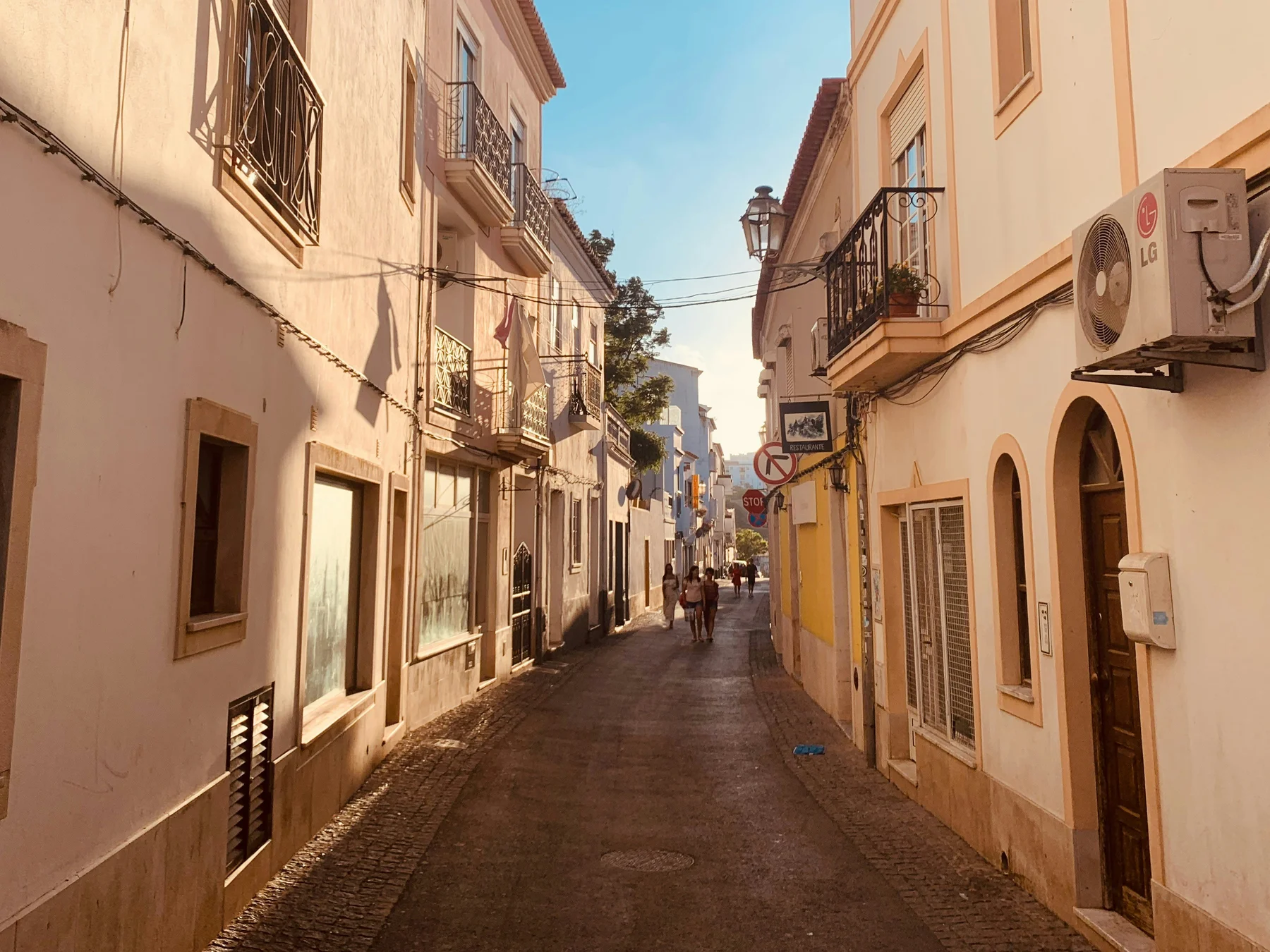
Lagos is a historic port city in the western Algarve with a well-preserved old town, dramatic cliff coastline, and some of Portugal's most photographed beaches. It suits couples, solo travellers, and families equally, and works as a base for exploring the wider western Algarve.
Why Visit Lagos
Lagos has the energy of a place that knows it’s beautiful but hasn’t become obnoxious about it. The old town is compact and genuinely lived-in, with cobbled streets and tiled facades. Enough good restaurants to fill a week without repeating. Bars spill onto the pedestrianised streets after dark, and in summer the town stays up late. But the real pull is south of the centre: a coastline of golden sandstone cliffs, sea arches, and sheltered coves that rank among the most photographed in Europe.
The town’s history runs deeper than most visitors expect. Lagos was the launchpad for Portugal’s Age of Discoveries in the 15th century, and the site of Europe’s first recorded slave market in 1444. Henry the Navigator governed the Algarve from here. That maritime past is visible in the Forte da Bandeira at the harbour mouth and in the churches funded by returning sea captains. The Slave Market Museum on Praça do Infante confronts the darker side of that history directly. It is not a place that sanitises its history, which is to its credit.
The practical appeal is simpler. Lagos sits at the end of the Algarve railway line and has reliable bus connections. It works as a base for the entire western Algarve, with Sagres and Cabo de São Vicente a 40-minute drive away, and the central Algarve beaches (Benagil, Marinha) reachable within an hour. The international crowd that gravitates here tends toward independent travellers, surfers, and younger couples rather than the package-holiday demographic you find further east. Good value for the Algarve, too, particularly outside peak season.
Best Things to Do in Lagos
Ponta da Piedade
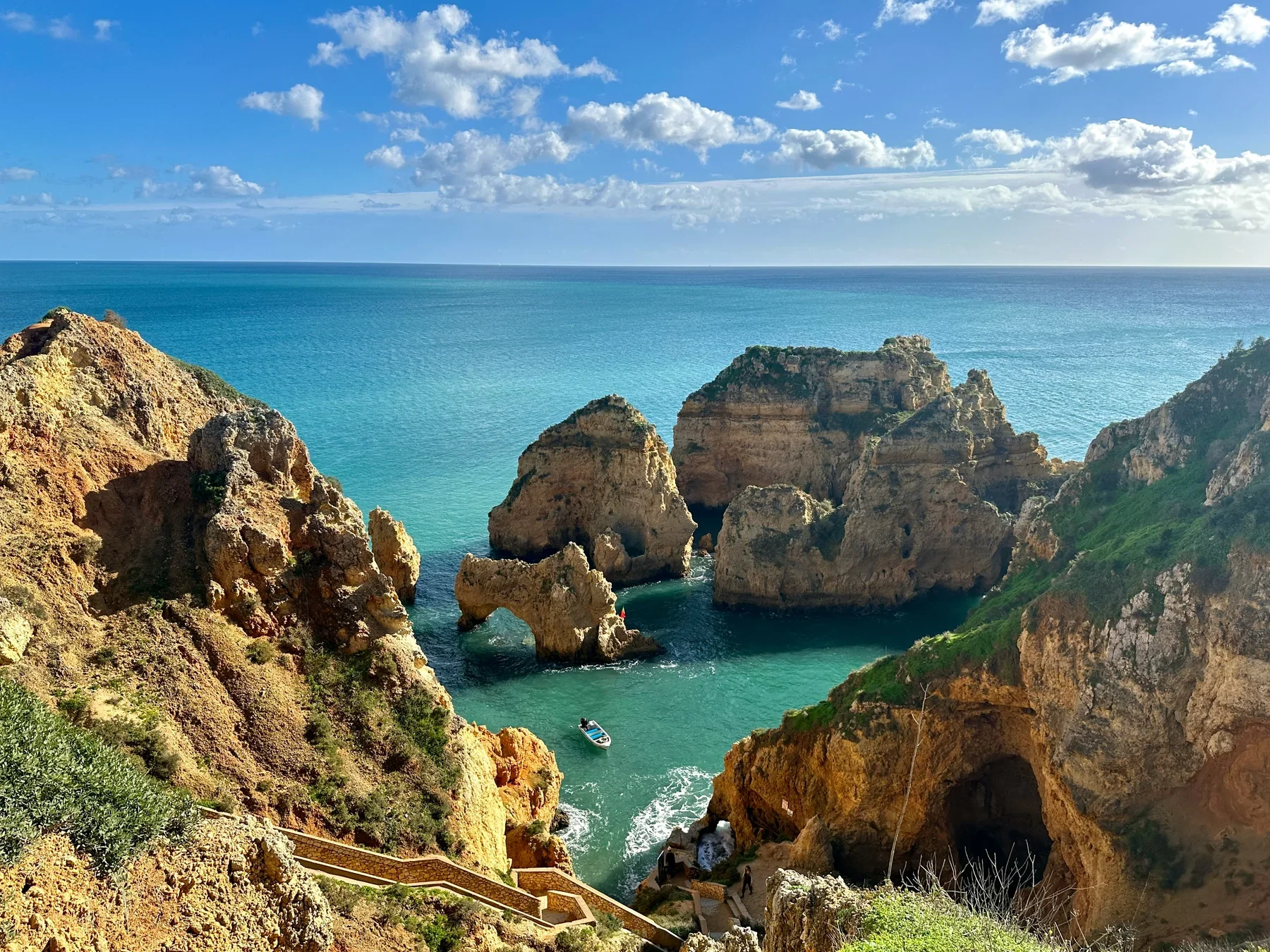
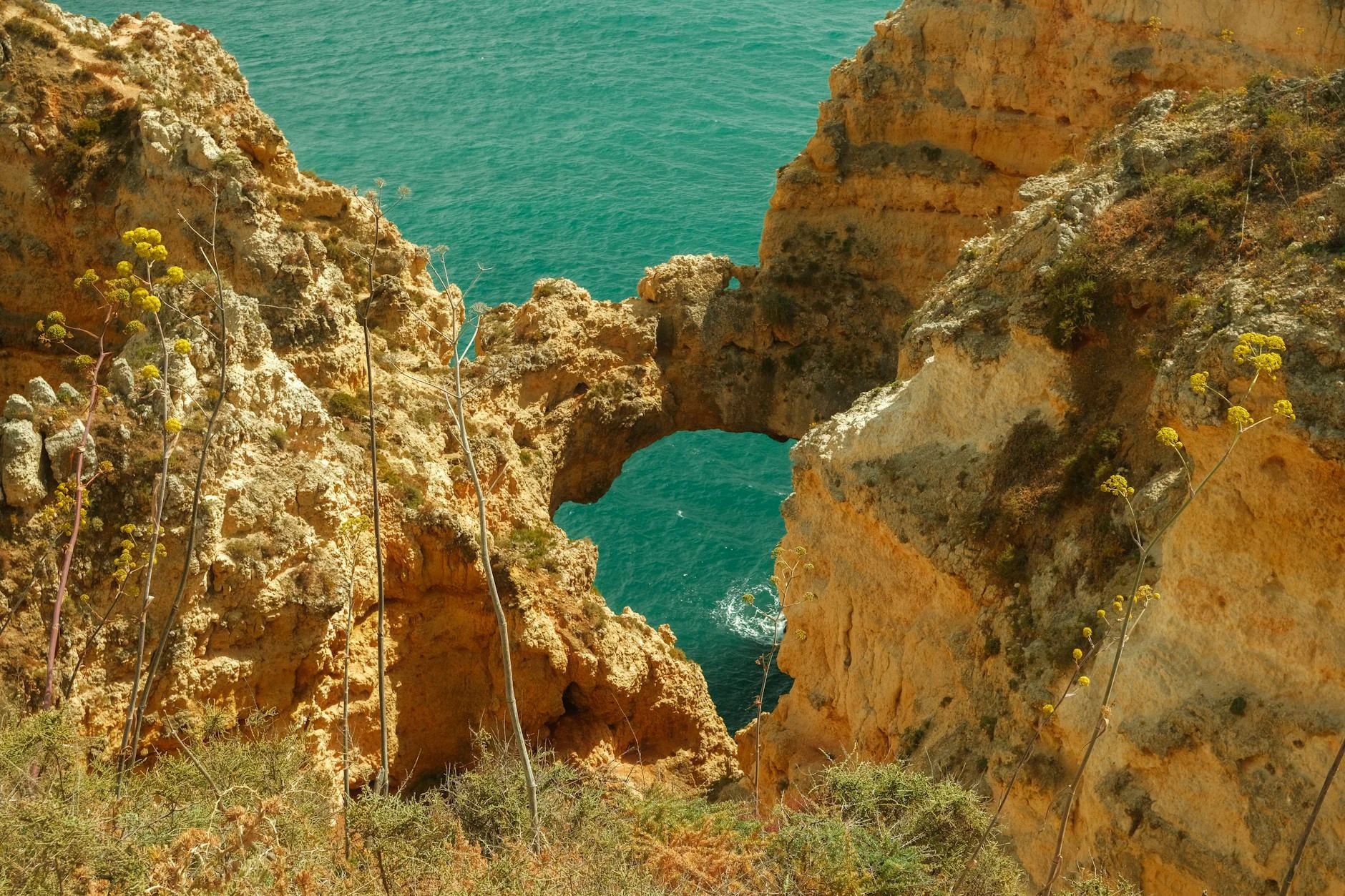
Three kilometres south of the centre, this headland is the single best natural sight in the western Algarve. The Atlantic has carved golden sandstone into sea stacks and grottos, with natural arches framing the water below. The cliff-edge boardwalk gives you the overview. The boat tours from the base of the cliffs are the better way to see it: small wooden boats thread through the rock formations for about 75 minutes. Go in the morning when the light hits the cliffs and the sea is calmer. There is a free car park by the lighthouse, and you can also walk from the old town in about 30 minutes.
The Old Town
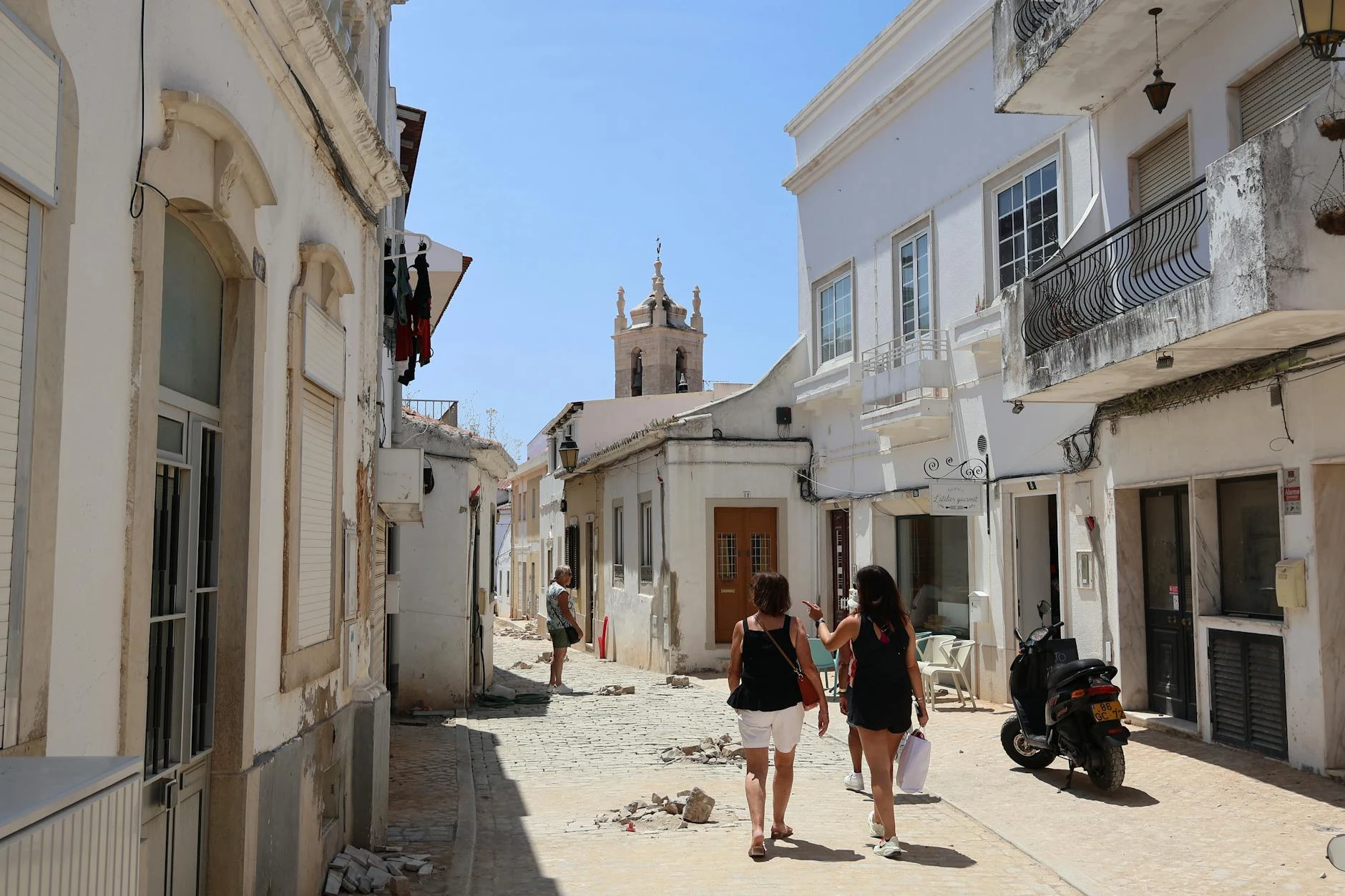
The area inside the medieval walls is small enough to cover in an afternoon, but the pleasure is in the unhurried version. Praça Gil Eanes is the social centre, surrounded by cafés. From there, the streets branch into narrower lanes where you’ll find independent shops, azulejo-fronted houses, and the occasional cat sunning itself on a step. Worth lingering rather than ticking off sights.
Igreja de Santo António and the Municipal Museum
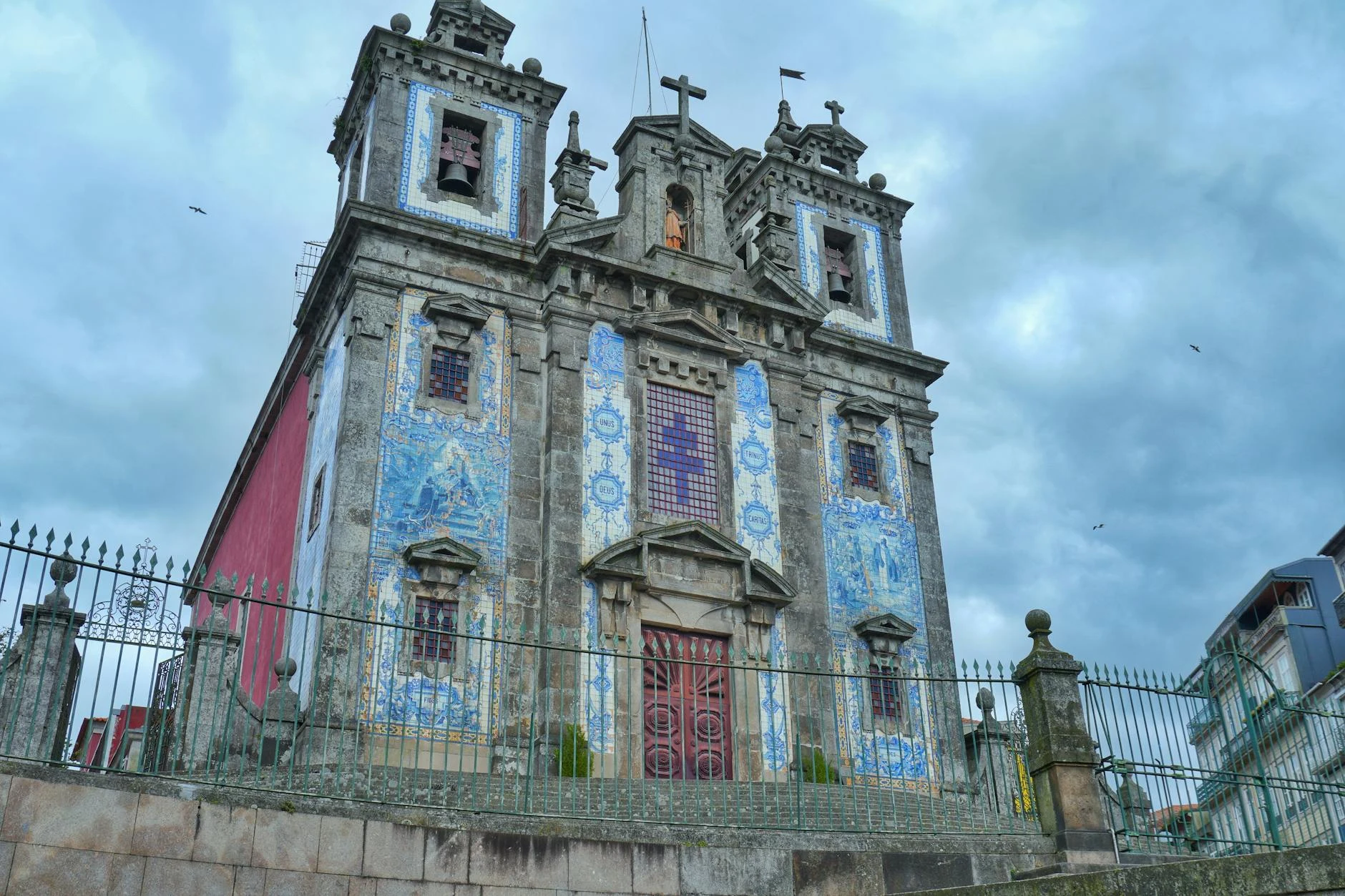
The church is accessed through the attached Municipal Museum (small admission fee; a combined ticket also covers the Slave Market and Forte da Bandeira). The interior is an extraordinary wall-to-wall display of baroque gilded woodwork, with painted ceilings and blue-and-white azulejos. The museum itself is charmingly chaotic: Roman mosaics sit next to old surgical instruments and fragments of the Berlin Wall. Closed Mondays.
Mercado de Escravos (Slave Market Museum)
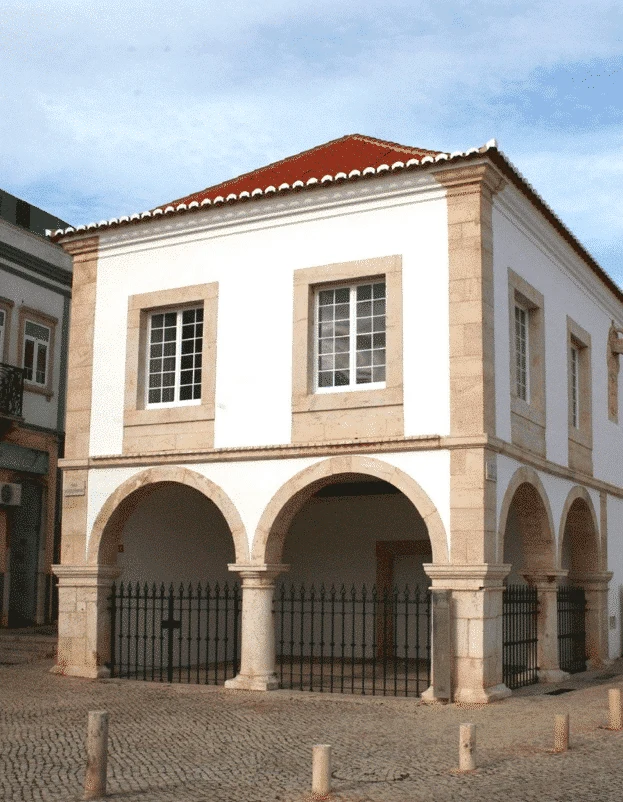
Located on Praça do Infante, this museum occupies the site where enslaved Africans were first sold in Europe in 1444. Opened in 2016, it uses bilingual displays and tablet-guided exhibits to document the Portuguese slave trade. The archaeological section includes human remains found in a medieval dump nearby. It takes about 45 minutes. Small admission fee. Not a comfortable visit, but an important one.
Kayak Tours
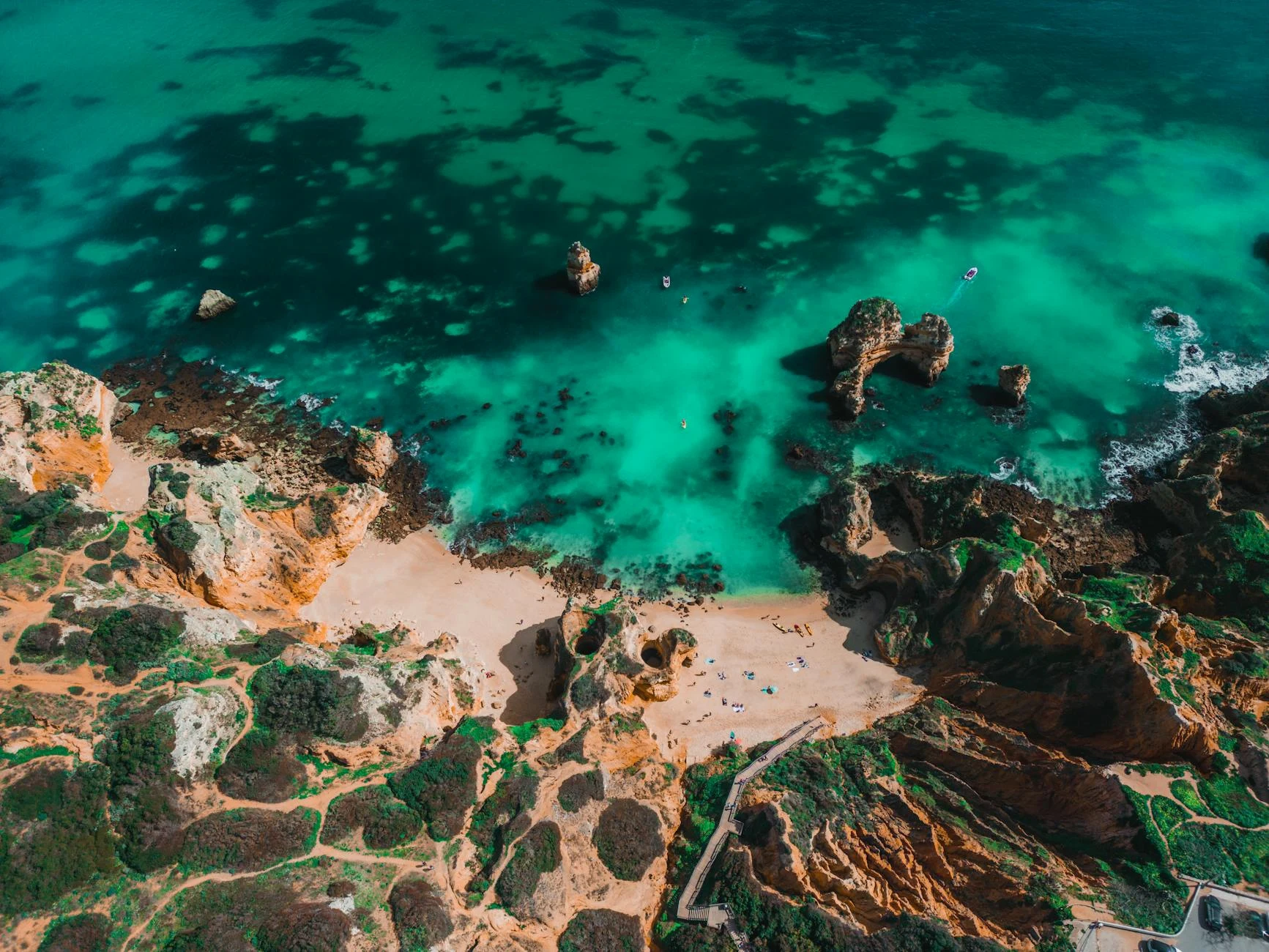
Guided kayak trips launch from Praia da Batata and head south along the cliff coast, entering sea caves that the larger boats cannot fit into. Tours run about two hours and are suitable for beginners. Morning departures get the flattest water. Book a day ahead in summer.
Forte da Ponta da Bandeira
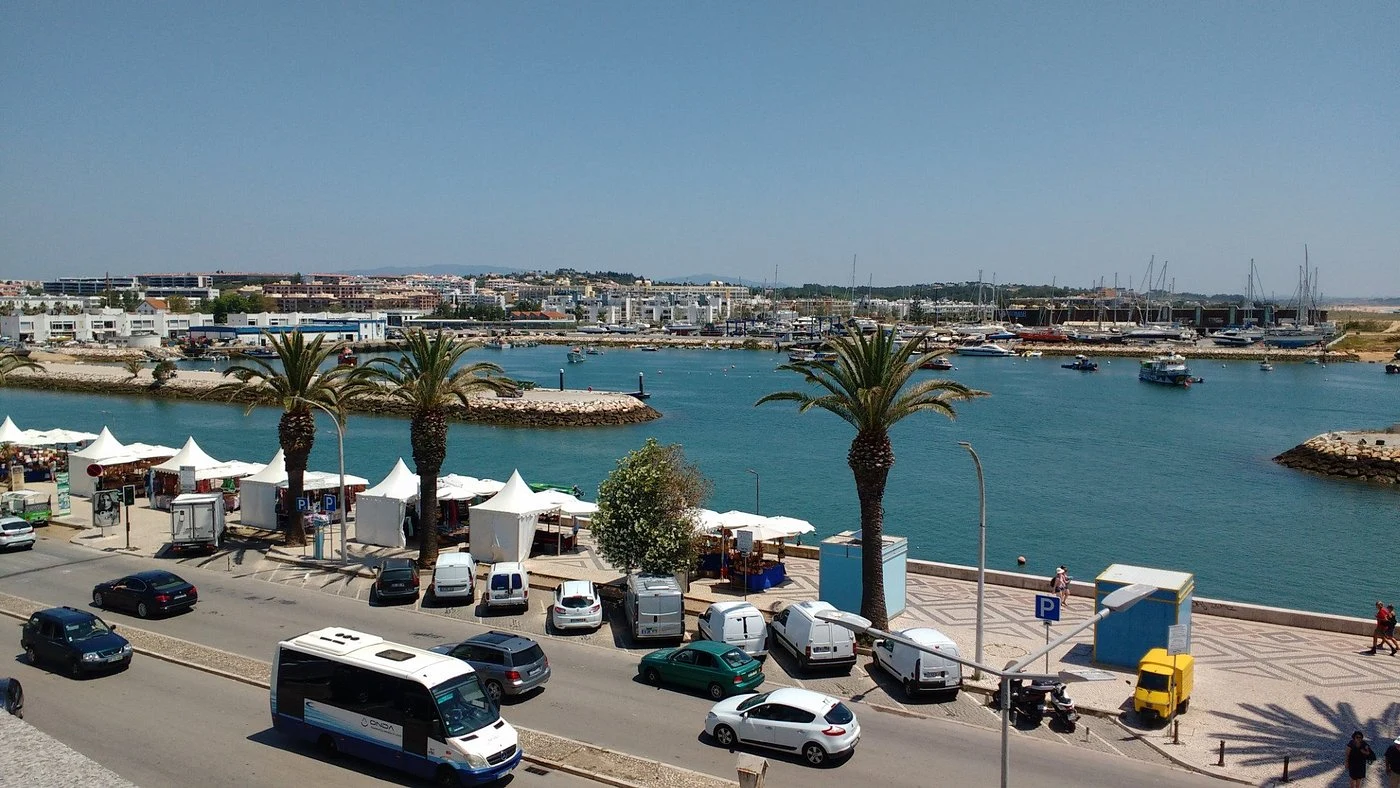
This small 17th-century fort guards the harbour entrance just below the old town walls. The interior is modest (a chapel with azulejos, a few rooms on the fort’s history), but the rooftop views across the harbour and out to sea justify the entry fee. Five minutes from Praça do Infante.
Saturday at the Mercado Municipal
The municipal market on Avenida dos Descobrimentos is best on Saturday mornings. The ground-floor fish hall is the draw: rows of fresh catch laid out on ice, vendors shouting prices. Upstairs is fruit, vegetables, and flowers. Even if you are not buying, the atmosphere is specific to Lagos and nothing like a supermarket.
Best Beaches Near Lagos
Praia Dona Ana is the most photographed beach in Lagos, set between golden cliff walls with clear, sheltered water. It has full facilities (lifeguards, toilets, a restaurant at the top), but gets crowded fast in summer. Arrive before 10:00 in July and August.
Praia do Camilo is the small, steep-staircase beach just south of Dona Ana. The setting is dramatic: 200 wooden steps descend between cliff walls to a tiny cove. Beautiful, but the size means it fills up completely on summer afternoons. Better as a morning visit.
Meia Praia is the opposite: a 4-kilometre sweep of flat golden sand stretching east from the marina. This is where locals go for a long walk, where families set up for the day, and where watersports operators cluster. Several beach bars line the first kilometre. Space is rarely a problem, even in August, if you walk past the first section.
Praia da Batata is the town beach, directly below the old town walls. Convenient but small. Good for a quick swim after a morning of sightseeing.
Praia de Porto de Mós sits on the western side of the Ponta da Piedade, backed by high cliffs. Bigger and less crowded than Dona Ana or Camilo, with a couple of restaurants on the beach. The car park is free but the access road can bottleneck in summer.
Where to Eat in Lagos
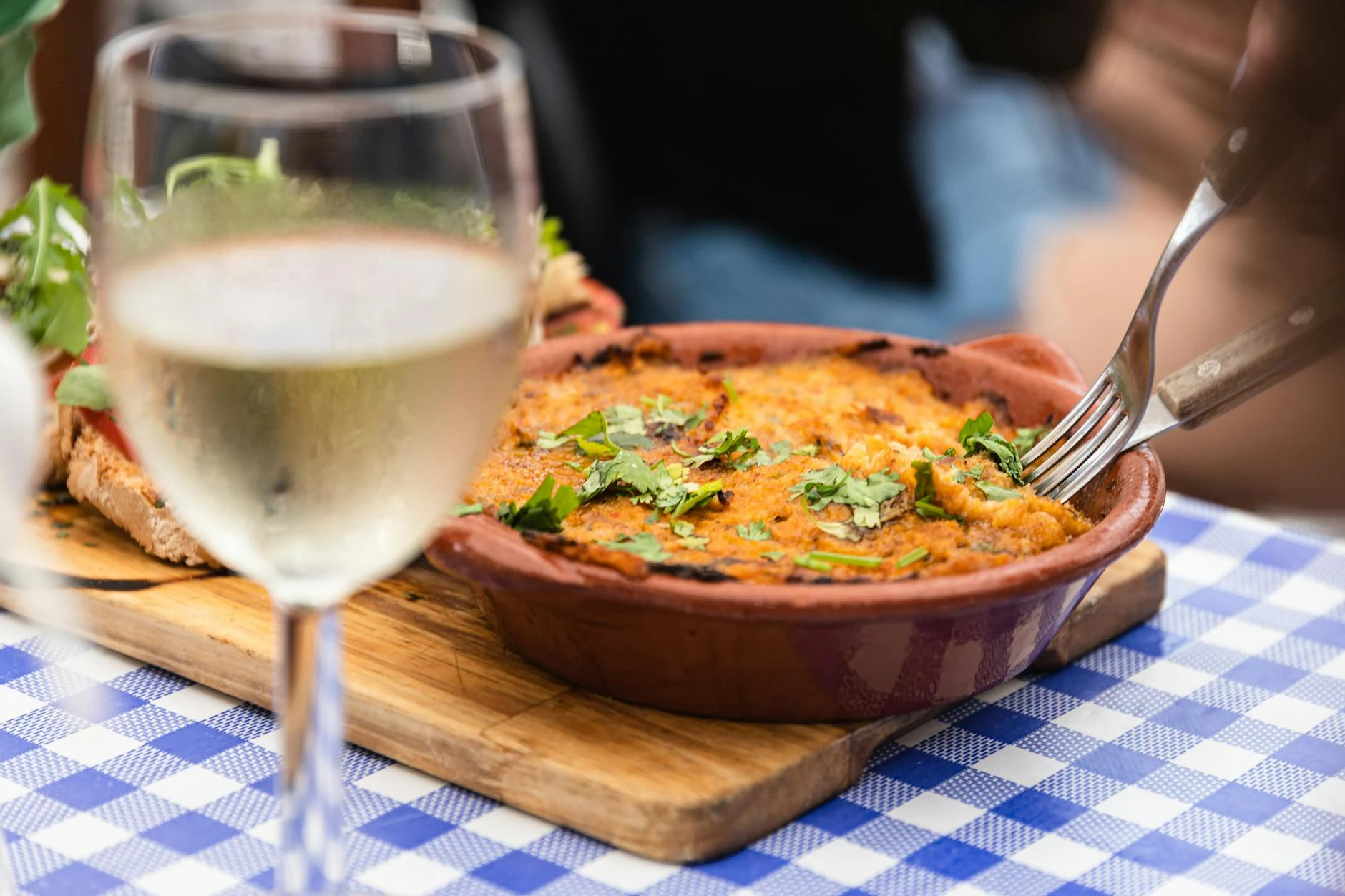
The restaurants along Rua 25 de Abril (the main pedestrianised street) are hit and miss. Some are fine. Others have laminated photo menus and staff pulling you in from the pavement, which tells you what you need to know. The better eating in Lagos happens one or two streets off the main drag, or outside the old town entirely.
Casinha do Petisco is the restaurant locals mention first when you ask about cataplana. The place is tiny, family-run, and does not take reservations. The cataplana de marisco and the arroz de marisco are both excellent. Arrive before 19:00 or prepare to wait on the pavement. Not cheap for what it looks like, but the portions and quality justify it.
Adega Típica A Forja is the blue-door restaurant on Rua dos Ferreiros. Grilled fish is the strength. The space is small, the atmosphere is warm, and the wine list leans heavily on Algarve and Alentejo producers. A Lonely Planet mention means it books up in summer, so reserve ahead.
Casa Chico Zé requires a short drive but is worth the effort. Lunch only (closes around 15:00), closed Sundays and Saturdays at 16:00. The grilled fish and meat come straight off a charcoal grill and land on your plate within minutes. The vibe is more canteen than restaurant. Not fancy. Very good.
For a special dinner, Restaurante dos Artistas occupies a restored 250-year-old building in the historic centre, with a walled garden that feels entirely removed from the street outside. The menu is modern European with strong Algarve ingredients. Book the garden table if available.
For quick, low-cost petiscos, Cervejaria Ferradura is a proper locals’ bar that serves garlic prawns and flaming chouriço alongside cold beer. No pretension, no frills. Works well as a pre-dinner stop or a late-night snack.
One note on seafood pricing: Lagos restaurants that advertise fresh fish typically price it per kilogram, not per portion. Ask the waiter to weigh the fish before they cook it, or you may get a surprise on the bill. This is not a scam; it is standard practice. Just ask.
Where to Stay in Lagos
Old town is the best location for first-time visitors. You are within walking distance of restaurants, bars, and Praia da Batata. The trade-off is noise on summer nights, especially on or near Rua 25 de Abril. Light sleepers should ask for a room facing away from the main streets.
Marina area is modern, quieter, and a 5-minute walk across the footbridge to the old town. Several apartment-style hotels sit here, with parking and pools. Good for families.
Meia Praia side works if you want to be on the beach. The long strip has a few larger hotels (Tivoli Lagos is the established name here) and apartment complexes. You’ll need to walk or drive to the old town for dinner, but the beach is on your doorstep.
Budget travellers have good options. Lagos has a strong hostel scene, concentrated in and around the old town. Fine-dining-adjacent hotels like the Cascade Wellness Resort or Palmares Beach House (home to the Michelin-starred Al Sud restaurant) sit at the upper end.
Book early for July and August. Lagos fills up, and by May the best-value accommodation is often gone.
How to Get to Lagos
From Faro Airport: The most common arrival route. By car, take the A22 motorway west (tolled, about 55 minutes) or the toll-free N125 through smaller towns (about 1 hour 20 minutes). The Vamus Aerobus (route 56) runs directly from Faro Airport to Lagos bus station, taking around 2 hours 20 minutes, with more departures in summer and a reduced service in winter. The regional train runs from Faro city station (not the airport) to Lagos, taking about 1 hour 45 minutes. To reach Faro station from the airport, take the local bus or a taxi. Private transfers are available from the airport.
From Lisbon: The Rede Expressos bus takes approximately 4 hours. By car, it is about 3 hours via the A2 south then the A22 west (both tolled). The train from Lisbon requires a change at Tunes and takes about 3.5 hours total.
Parking in Lagos: Do not attempt to drive through the old town. The streets are narrow, mostly one-way, and pedestrianised in the centre. Free parking behind the marina is the easiest option. Walk across the footbridge and you are in the old town in five minutes. Paid underground parking exists on Avenida dos Descobrimentos and off Estrada da Ponta da Piedade. In summer, the free lots fill early. Arrive before 10:00 or park further out and walk.
Local Tips
The old town is at its best in the early morning before the day-trippers arrive from other Algarve towns. By 11:00 in summer, Praça Gil Eanes is busy with tour groups. Before 09:00, you can walk the streets in relative quiet and actually see the tilework on the buildings without someone’s selfie stick in your field of vision.
Lagos has the best nightlife in the western Algarve, concentrated on and around Rua 25 de Abril and Rua da Barroca. In summer, bar crawls are a fixture (organised groups of backpackers moving between venues). If that sounds like your thing, you won’t have trouble finding one. If it doesn’t, avoid those streets after 23:00 and head to the marina-side bars or the rooftop at Mar d’Estórias for a quieter drink with a view over the old town.
A combined museum ticket covers the Municipal Museum, Slave Market, and Forte da Bandeira, valid for a full week. Worth getting if you plan to visit two or more. Worth getting even if you only plan to see two of the three, since the saving kicks in on the second visit.
One thing most guides skip: the Parque da Cidade (city park) running alongside the old town walls is a genuine pocket of quiet in summer. Shaded benches, green space, and almost no tourists. Good for a break between the beach and dinner.
The Saturday morning fish market inside the Mercado Municipal is the best free show in town. Get there by 09:00, buy some fruit upstairs, and have coffee at one of the cafés on the adjacent square.