Albufeira is the most popular and developed resort town in the Algarve, located in the central coast about 35km west of Faro. It draws families and couples alongside nightlife seekers, with a long stretch of beaches, a pedestrianised old town, and the infamous Strip party district. Best suited to visitors who want convenience and variety over tranquillity.
Why Visit Albufeira
Albufeira is the most overtly commercial town in the Algarve, and it does not pretend otherwise. The Strip pumps music until 6am, the old town fills with restaurant touts in summer, and entire neighbourhoods exist primarily to serve package tourists. None of that is a secret.
The reason Albufeira still works, despite all of this, is the old town. The cobbled streets sloping down from Largo Engenheiro Duarte Pacheco to the tunnel that opens onto Praia dos Pescadores still have a recognisable fishing village skeleton underneath the tourist layer. The whitewashed buildings, the azulejo-trimmed facades, the narrow alleys where you can hear someone’s television through an open window. Strip that tourist infrastructure away in your mind and there is a real town underneath, which is more than can be said for some Algarve resort developments. The old town square on a warm evening, with street musicians playing and the terraces full, is a genuinely pleasant place to sit. That matters.
The other reason is convenience. Albufeira sits in the centre of the Algarve coast, 35km from Faro Airport, with good road connections east and west. The municipality includes around 30km of coastline and over 20 beaches, ranging from long sandy stretches like Falésia to small cliff-backed coves like São Rafael. If you want a base where everything is within reach and you never need to think too hard about logistics, this is it.
Best Things to Do in Albufeira
Walk the Old Town
The pedestrianised centre of Albufeira is small enough to cover in an hour but interesting enough to reward a longer, slower visit. Rua 5 de Outubro is the main artery, running downhill from the square to the tunnel carved through the cliff that opens directly onto the beach. The tunnel is unusual, genuinely atmospheric, and one of the few things about Albufeira that photographs the way it actually feels.
The tourism office sits on Rua 5 de Outubro if you need maps or information. The streets around Largo Engenheiro Duarte Pacheco are where the old town is most alive, especially after 6pm in summer when the terraces fill and musicians set up. Go before sunset for the best light on the white buildings.
Albufeira Marina
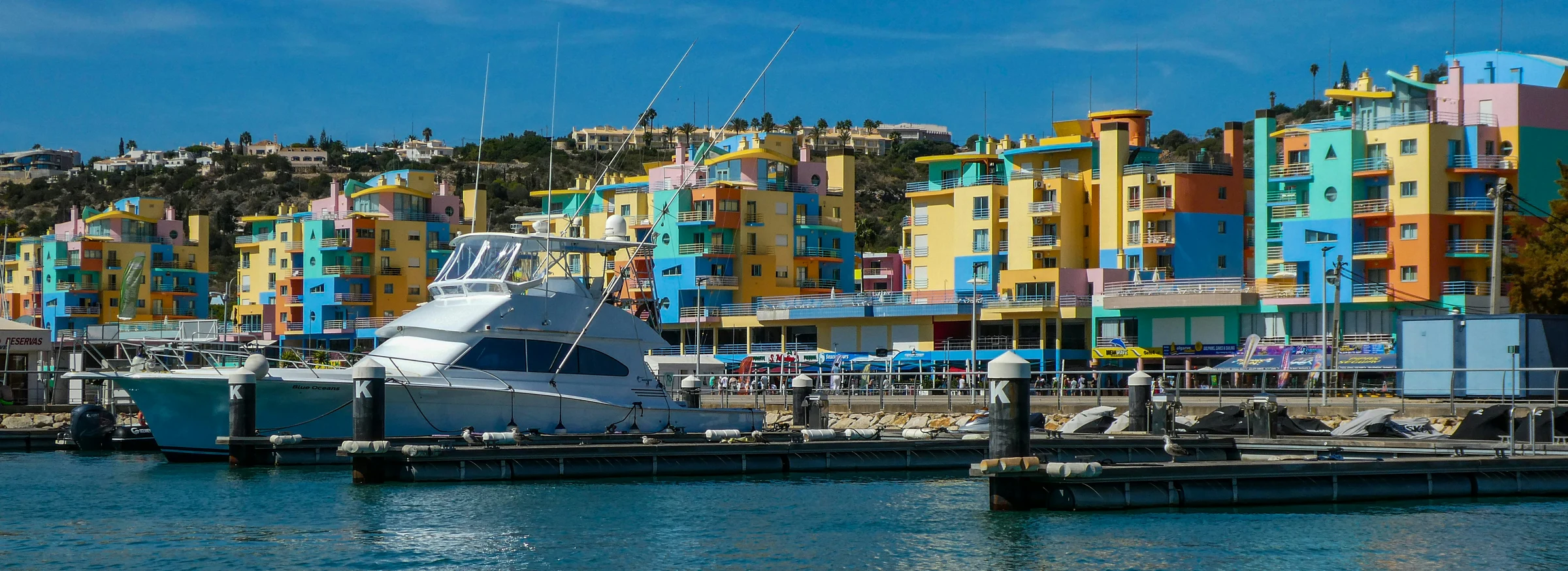
About 2km west of the old town (walkable but steep, so consider Bolt or the Giro bus), the marina is worth a visit even without booking a boat trip. The colourful apartment blocks reflected in the water are photogenic, and the restaurants here tend to be more relaxed than the tourist-facing places in the old town centre. Most boat tours, dolphin cruises, and Benagil cave excursions depart from the marina.
The walk from the old town involves a steep hill, which is worth knowing if you have mobility concerns or small children in a pushchair.
Boat Trip to Benagil Cave
Several operators run trips from the marina west along the coast to Benagil, passing dramatic cliff formations and sea arches. The trips usually combine cave visits with dolphin spotting. Morning departures offer calmer water and better light inside the cave. Trips run around 2-2.5 hours.
Day Trip to Silves
Silves is a 30-minute drive north and is the obvious choice for a day away from the beach. The red sandstone castle is the best-preserved Moorish fortification in the Algarve, and the town itself is quiet and authentically Portuguese in a way Albufeira cannot be. Small admission fee for the castle, with the option to add the archaeological museum. Restaurants in Silves are noticeably cheaper than on the coast.
Bus 17 (Vamus) runs between Albufeira and Silves but has limited departures. Uber or Bolt is simpler if you are a group.
Castle of Paderne
Eight kilometres north of town, the ruined 12th-century Almohad fortress is believed to be one of the seven castles on the Portuguese flag. The castle itself is often closed to entry, but the surrounding trail through olive groves and carob trees is the real draw. The medieval bridge below the castle is a worthwhile stop. Allow a half-day, and bring water because there are no facilities at the site.
Zoomarine and Slide & Splash
Both parks are in the Albufeira municipality, about 15 minutes by car from the centre (in Guia parish). Zoomarine is the more polished of the two, with dolphin shows and aquariums alongside water rides. Slide & Splash is a straightforward water park. Online booking often brings discounts over gate prices.
Neither park is reachable by public transport in any practical sense.
Praia da Falésia Cliff Walk
East of Albufeira, the clifftop trail above Praia da Falésia runs about 6km towards Vilamoura along red and ochre sandstone cliffs. Dramatic. The beach below stretches on and on. Go early morning or in the golden hour before sunset, both for the light and to avoid baking in the midday heat.
Best Beaches Near Albufeira
Praia de São Rafael is the best beach in the Albufeira area for scenery, a sheltered cove framed by golden rock formations with calm, clear water good for snorkelling. It gets busy in summer, and the car park fills fast, but it is the beach that most closely resembles the famous cove beaches of the western Algarve. About 8km west of the old town by car.
Praia da Falésia is completely different: a long, wide sandy beach backed by towering red-orange cliffs that stretches for roughly 6km east towards Vilamoura. The space here means it never feels as packed as the cove beaches, even in August. Excellent for families and long walks. Access from the clifftop car park via wooden stairs.
Praia dos Pescadores is the main town beach, reached through the old town tunnel or via the Elevador do Peneco (a lift from the clifftop). Convenient, with lifeguards and facilities, but it is the most crowded beach in summer for obvious reasons.
Praia da Oura, near the Strip, splits into two sections. The western part (Praia da Oura Poente) is the more developed, backed by hotels and bars. The eastern section is quieter. Skip it if you have a car and can reach São Rafael or Falésia instead.
Where to Eat in Albufeira
Albufeira has hundreds of restaurants and most of them are mediocre, tourist-facing operations with laminated menus in four languages and photos of every dish. Avoid any restaurant with someone standing outside trying to seat you. That rule alone will improve your trip.
Os Arcos is a budget-friendly local favourite on a side street in the old town. Fresh grilled fish, massive portions, and a daily specials board that changes based on what came in that morning. Not fancy, not trying to be. The kind of place where Portuguese families eat on a Tuesday.
Cabaz da Praia earns its slightly higher prices with a terrace directly overlooking Fisherman’s Beach. The seafood cataplana for two is the dish to order. Book ahead for a terrace table at sunset, especially between June and September, because everyone else has the same idea.
O Lusitano sits slightly outside the tourist core, which is precisely why it is good. The monkfish cataplana is excellent. The couvert (bread, dips, olives) is more interesting than the standard basket-of-bread-and-butter most places offer. Family-run, and genuinely warm service.
For cheap, filling Portuguese food with zero pretension, Adega do David does budget daily specials just outside the old town. The portions are aggressive. This is not the place for a refined dining experience, but it is the place for an honest lunch that costs less than a cocktail at most tourist bars.
At the other end of the scale, Vila Joya holds two Michelin stars and sits in a boutique hotel overlooking Praia da Galé, west of town. Fine-dining tasting menus. Book weeks ahead in summer.
Where to Stay in Albufeira
The old town is the best area if you want to walk to restaurants and bars without needing transport, and the main beach is minutes away on foot. Hotels here tend to be smaller, often three-star properties converted from older buildings. Expect character but not resort-level facilities. Hotel Baltum is well-located right in the old town centre, though rooms are basic.
The beach resort zone stretches east and west of the old town, with larger four and five-star hotels set back from the clifftops near beaches like Falésia, São Rafael, and Galé. These are better for families or anyone who wants pool access and a quieter setting. EPIC SANA Algarve near Falésia beach is one of the highest-rated options in this category. The trade-off is that you will need a car or taxi to reach the old town for evening meals.
Montechoro, the area around the Strip, suits nightlife-focused visitors. Hotels here are generally cheaper, and you can walk to the bars. The downside is obvious: it can be noisy, and the neighbourhood has little character during the day. Avoid if you are travelling with young children or want anything resembling a peaceful morning.
Apartments and villas through Airbnb and Booking.com are widely available and often better value than hotels, especially for families or groups staying a week or more. Prices swing dramatically by season: expect to pay two to three times more in July and August than in May or October.
How to Get to Albufeira
Faro Airport is the gateway. The drive takes about 40 minutes via the A22 motorway (tolled) or around 50 minutes on the free N125. If you are renting a car, every major rental company has a desk at the airport.
Private transfers are the most common arrival method for tourists without a rental car. YellowFish is one of the larger operators with a decent reputation locally. Book in advance, especially if arriving in peak summer when demand spikes.
The Aerobus (route 56) runs directly from Faro Airport to Albufeira bus station. More departures in summer, very limited in winter. Seats cannot be reserved, and the bus can fill up in peak season, so this is not a stress-free option if you have a tight schedule.
Uber and Bolt both operate in the Algarve. Faro Airport to Albufeira is a reasonable fare, but surge pricing during peak flight arrival windows can push costs higher. Wait times at the airport can also be long.
By train: Albufeira’s station (Ferreiras) is on the Algarve regional line, but it sits about 6km north of town. The connection from Faro takes around 35 minutes and costs a few euros, but then you need a taxi or the Giro local bus to reach the centre. Trains run roughly every one to two hours. Honestly, the train is not the best option for reaching Albufeira specifically because of the station’s distance from town.
From Lisbon: the drive takes about 2.5 hours via the A2 motorway (tolled). Rede Expressos runs direct long-distance buses from Lisbon’s Sete Rios terminal to Albufeira, taking around 3 hours.
From other Algarve towns: Lagos is about 45 minutes west by car. Faro is 40 minutes east. Vilamoura is 15 minutes. Silves is 30 minutes north. The Vamus intercity bus network connects these towns, though frequencies vary and weekend services are reduced.
Local Tips
The Giro bus network within Albufeira is surprisingly useful and cheap. It covers the old town, bus station, marina, Strip, and surrounding areas, and it saves the hassle of parking or paying for short Bolt rides. The orange line from Caliços terminal connects to the train station at Ferreiras.
Albufeira has two main supermarkets within reach: an Aldi near the bus station and a Pingo Doce on Avenida dos Descobrimentos. Both are far cheaper than buying water, snacks, or wine from tourist shops in the old town. (The markup on a bottle of wine in a souvenir shop versus Pingo Doce is, frankly, insulting.)
Summer evenings in the old town are best experienced from about 7pm onward. The heat of the day drops, the terraces fill up, and the atmosphere is at its most pleasant. The square itself can feel packed, but the side streets one block back from Largo Engenheiro Duarte Pacheco are often much calmer and have some of the better restaurants.
The international sand sculpture festival (FIESA) runs annually in Pêra, about 10km west of Albufeira. It is billed as the largest sand sculpture event in the world and, scepticism aside, is genuinely impressive. Open roughly from late May through October. Worth a detour if you have a car.
Common Mistakes to Avoid
Eating on the main square without checking prices first. Some restaurants around Largo Engenheiro Duarte Pacheco charge significantly more than places one street back. Check the menu before sitting down, and be aware that the couvert (bread, olives, butter brought to the table unrequested) is not free. You can decline it.
Assuming the Strip and the old town are next to each other. They are about 3km apart, connected by a steep road. Walking between them at night in heels or after several drinks is not fun. Budget for a Bolt or taxi.
Booking a hotel near the Strip expecting peace and quiet. The noise in Montechoro during summer carries. If you are a light sleeper or travelling with young children, stay in the old town or at one of the beach resorts instead.
Trying to park in the old town in August. The streets are narrow, spaces are almost nonexistent, and the one-way system is confusing. Use the multi-storey car park on Rua do Município or park further out and walk or bus in.
Skipping the beaches west of town. Many visitors only go to the main beach (Praia dos Pescadores) because it is the closest. The beaches towards São Rafael and Galé are dramatically more scenic and only 10-15 minutes by car. Rent a car for at least one day if you do not have one, just for this.
The old town has two distinct personalities: the streets around Largo Engenheiro Duarte Pacheco are where to eat and drink with some atmosphere, while the Strip (Avenida Francisco Sá Carneiro) in Montechoro, about 3km away, is the nightlife zone. They are not within comfortable walking distance of each other, so plan accordingly or budget for a Bolt/Uber between the two.