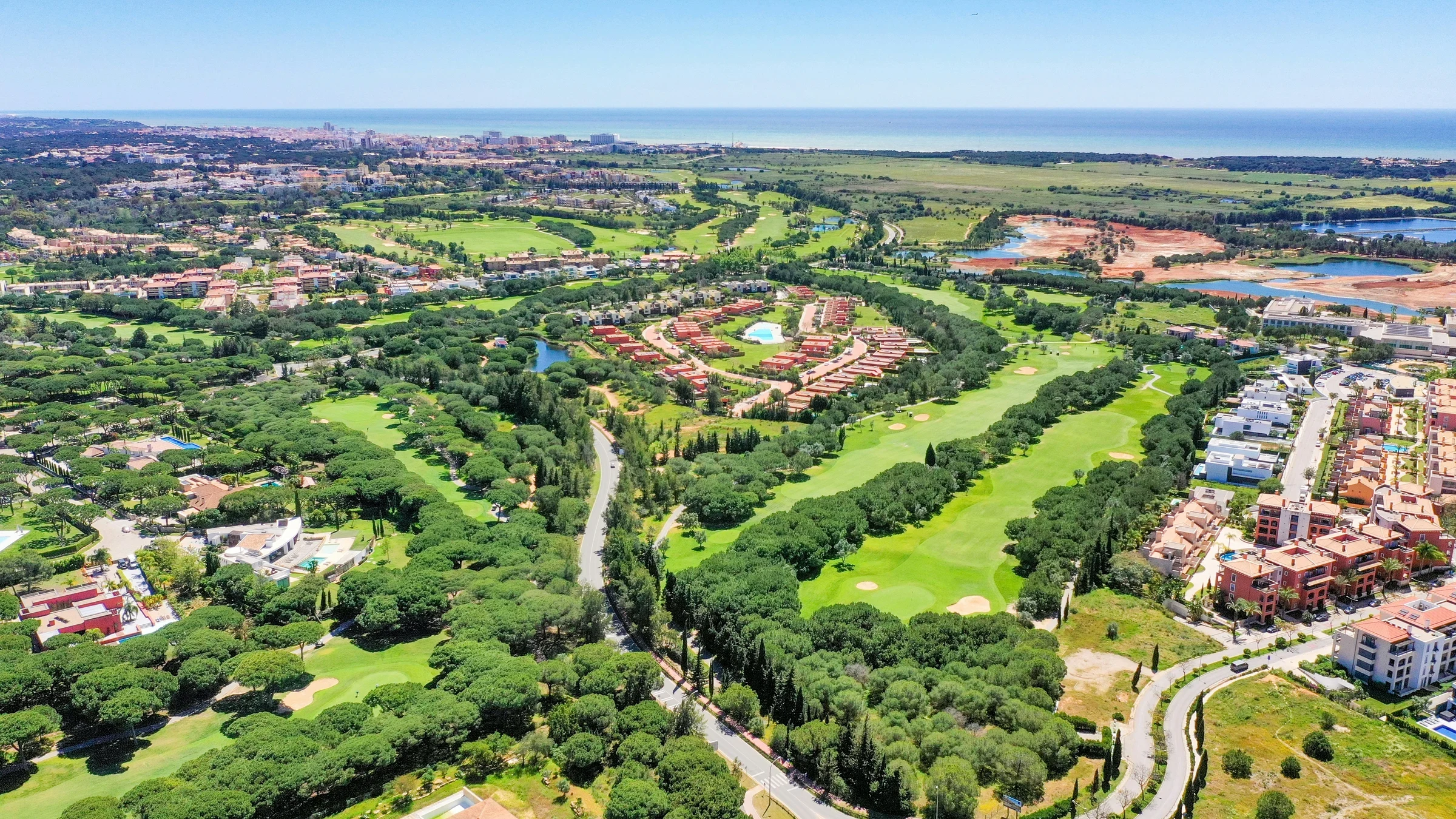
Vilamoura is a planned resort town in the central Algarve built around Portugal's largest marina, with 825 berths and a waterfront lined with restaurants and bars. It is one of Europe's top golf destinations, with five championship courses, and part of the Algarve's Golden Triangle alongside Vale do Lobo and Quinta do Lago. About 25 minutes from Faro Airport.
Why Visit Vilamoura
Vilamoura is not a Portuguese town in any traditional sense. There is no medieval centre, no church square where old men drink coffee. No fishing boats pulled up on the sand, no narrow lanes that force you to flatten against a wall when a car squeezes past. What there is: Portugal’s largest marina, five championship golf courses, a casino, and the kind of polished resort infrastructure that most of the Algarve lacks. It was planned from scratch in the 1960s and built outward from the marina, and everything about the place reflects that deliberate construction. Clean lines, manicured hedges, wide roads.
That honesty matters. Vilamoura does not pretend to be something it is not, and visitors who arrive expecting a traditional Algarve village will be confused. Arrive expecting a well-run, upmarket resort destination with excellent facilities and a genuinely pleasant marina, and you will find exactly that. The marina waterfront on a warm evening, with the boats lit up and the restaurants full, is one of the better experiences on the central coast. Summer air temperatures reach 29-30°C in July and August, and the evenings stay warm enough to eat outside comfortably well into October.
Best Things to Do in Vilamoura
Walk the Marina
The marina is Vilamoura. Eight hundred and twenty-five berths, from modest sailboats to serious superyachts (a new expansion added 68 additional berths for vessels up to 40 metres). The waterfront promenade wraps around the harbour with restaurants on one side and the boats on the other. The best time to walk it is late afternoon into early evening: the light turns golden, the restaurant terraces fill up, and the whole strip comes alive without the midday heat. During the day, the marina is also the departure point for coastal boat trips heading west towards the Benagil caves and the Albufeira grottoes.
Cerro da Vila Roman Ruins
This is the thing that surprises people. Tucked behind the marina, within walking distance of the waterfront restaurants, sits a genuine Roman archaeological site dating to the 1st century AD. The ruins include the foundations of a maritime villa with preserved mosaic floors, bath complexes (hot, warm, and cold rooms all identifiable), fish sauce production facilities, and a necropolis. A small museum displays artefacts spanning from the Bronze Age through Islamic occupation. The site was discovered by a farmer in 1963, and excavation has continued in various phases since. Open weekdays only, closed for lunch. Worth an hour, and the contrast with the modern resort around it is half the experience.
Championship Golf
Vilamoura’s reputation in European golf is earned. Five courses sit within the resort area: the Old Course, which opened in 1969 and has been freshly renovated (named Portugal’s Best Golf Course at the 2025 World Golf Awards); Pinhal, a tight parkland layout through pine forest; Laguna, flatter and more open with water hazards; Millennium, the most forgiving for mid-handicappers; and The Els Club, formerly the Victoria course that hosted the European Tour’s Portugal Masters, redesigned by Ernie Els and now open as a semi-private club. Vila Sol, just outside the resort boundary, adds a sixth option. Green fees are not cheap, but the course conditioning and facilities are a clear step above most of southern Europe.
Casino Vilamoura
The largest casino in the Algarve, run by the Solverde group. Table games include roulette, blackjack, and poker. Over 500 slot machines. The casino also hosts regular live entertainment, dinner-and-show packages, and operates the Dice Club, one of the few proper nightclubs in this part of the Algarve. Smart casual dress code: trainers and flip-flops will get you turned away. Bring your passport or ID card because you will need it at the door.
Praia da Falésia and the Cliff Trail
The red-orange sandstone cliffs of Praia da Falésia begin at Vilamoura’s eastern edge and stretch several kilometres towards Albufeira. The beach itself is one of the longest and most striking in the Algarve. A clifftop trail runs along the top with views that improve the further west you walk. From Vilamoura, you can access the eastern end of the beach near the Rocha Baixinha area, where several beach restaurants operate year-round.
Best Beaches Near Vilamoura
Praia da Falésia is the headline beach, and for good reason. The cliffs behind it shift from white to deep ochre along their length, and the beach is long enough that you can always find space, even in August. The eastern end near Vilamoura is the most developed stretch, with beach restaurants and sun lounger hire. Walk west for emptier sand and more dramatic cliff colours.
Praia de Vilamoura sits directly in front of the marina. A serviceable town beach with sun lounger hire, water sports, and beach bars. Convenient if you are staying in the marina area, but it fills quickly in summer and lacks the visual drama of Falésia. For more space, walk east along the promenade towards Quarteira, where the beach widens and the crowds thin.
For a contrast, drive west to Albufeira and its cove beaches, or east to Quarteira for a simpler, more local beach experience.
Where to Eat in Vilamoura
The marina waterfront is lined with restaurants, and the quality varies more than the prices do. The views are lovely. The problem is that some kitchens know the clientele rotates weekly and cook accordingly. The best strategy: eat on the waterfront for a drink and the atmosphere, then walk one street back for a proper meal.
Willie’s Restaurant is the fine dining reference point. It sits in a quiet residential area near the Pinhal golf course, not on the marina, which tells you where its priorities lie. Chef Willie Wuger has been running the kitchen for over two decades. The menu is classic European with smart modern touches, the wine list is deep, and the garden terrace on a summer evening justifies the bill. Booking is essential.
Akvavit occupies a deck built over the marina water and has been there since 1990. The Scandinavian-Portuguese fusion menu sounds like a stretch, but the execution has earned three decades of loyalty. The seafood cataplana is good, the cured salmon is better. Also one of the few places in the marina area that does a genuinely good breakfast.
One row back from the waterfront, the Rua da Botelha area holds several of the more reliable restaurants. Casa do Pescador has been serving traditional Portuguese seafood for nearly thirty years. Nothing revolutionary, just well-sourced grilled fish and honest cooking at prices that do not include a marina view surcharge. O Cesteiro, nearby, runs on the same principle: unpretentious Portuguese food done well, with a cataplana worth ordering.
For something entirely different, Purobeach operates as a beach club with Balinese daybeds, DJs, and a fusion menu that pulls from three continents. A splurge, and deliberately so.
Where to Stay in Vilamoura
Vilamoura’s accommodation skews upmarket. The concentration of four- and five-star hotels here is higher than anywhere else in the Algarve. The marina area has the most options and the most convenient location: the Tivoli Marina and Crowne Plaza are both within walking distance of the waterfront. For something more resort-oriented with pools and gardens, the Hilton Vilamoura and the Domes Lake Algarve sit slightly further out but offer larger, more self-contained complexes.
Budget travellers will find Vilamoura a tough proposition. Self-catering apartments and holiday rentals are the best-value option, particularly in the residential blocks behind the marina. Alternatively, staying in Quarteira costs significantly less and puts you within a 20-minute walk of the Vilamoura marina along the seafront promenade.
Prices drop substantially outside July and August. Shoulder season (May-June, September-October) offers the best balance: warm weather, reasonable rates, and golf courses that are not fully booked. The winter months bring the lowest rates, and the marina restaurants stay open year-round, though the atmosphere is quieter.
How to Get to Vilamoura
Vilamoura is about 25 kilometres from Faro Airport, roughly 25 minutes by car. Take the A22 motorway (toll-free since January 2025) and exit at the Vilamoura junction. The alternative N125 road through Loulé takes about the same time but is more congested.
Public transport is impractical. There is no train station in Vilamoura (the nearest is Loulé, about 15 minutes away by taxi). Bus services exist from Faro and Albufeira but are infrequent and slow. Most visitors either rent a car or arrange an airport transfer. A car is useful for reaching golf courses, beaches beyond walking distance, and neighbouring towns, but once you are at the marina, you can walk to most things.
Parking near the marina means paid street parking with ticket machines and enforcement that does not take evenings off. The large open lot behind the marina area (near the McDonald’s) is free and about five minutes on foot from the waterfront. In peak summer, arrive before late morning or expect to search.
Local Tips
The Golden Triangle label (Vilamoura, Vale do Lobo, Quinta do Lago) is a real estate marketing term as much as anything, but it accurately describes the concentration of upmarket resort infrastructure in this pocket of the central Algarve. If golf is the priority, Vilamoura is the logical base: the courses are walkable or a short drive from most hotels, and the marina provides an evening scene that standalone golf resorts lack.
For real Portuguese life, walk or drive to Quarteira. The two places sit side by side and could not be more different. Quarteira has a daily fish market where the catch comes off the boats and onto the counter within hours. Its Wednesday street market is one of the biggest on the coast. The seafront promenade connects the two, and the walk takes about 20 minutes. Eating in Quarteira and drinking in Vilamoura is a strategy that locals understand implicitly.
The Cerro da Vila ruins close over lunch and are only open on weekdays, which catches people out. Plan to visit in the morning. The site has no shade, and the Algarve sun in July and August is not something to underestimate. One more thing: the Old Course golf clubhouse was recently renovated and the bar is open to non-golfers. It is one of the more pleasant spots in Vilamoura for a late-afternoon drink away from the marina crowds.
The marina restaurants with the best waterfront views tend to charge a premium for the position. Walk one street back to the Rua da Botelha area for better food at lower prices. The view costs you nothing on the walk home.