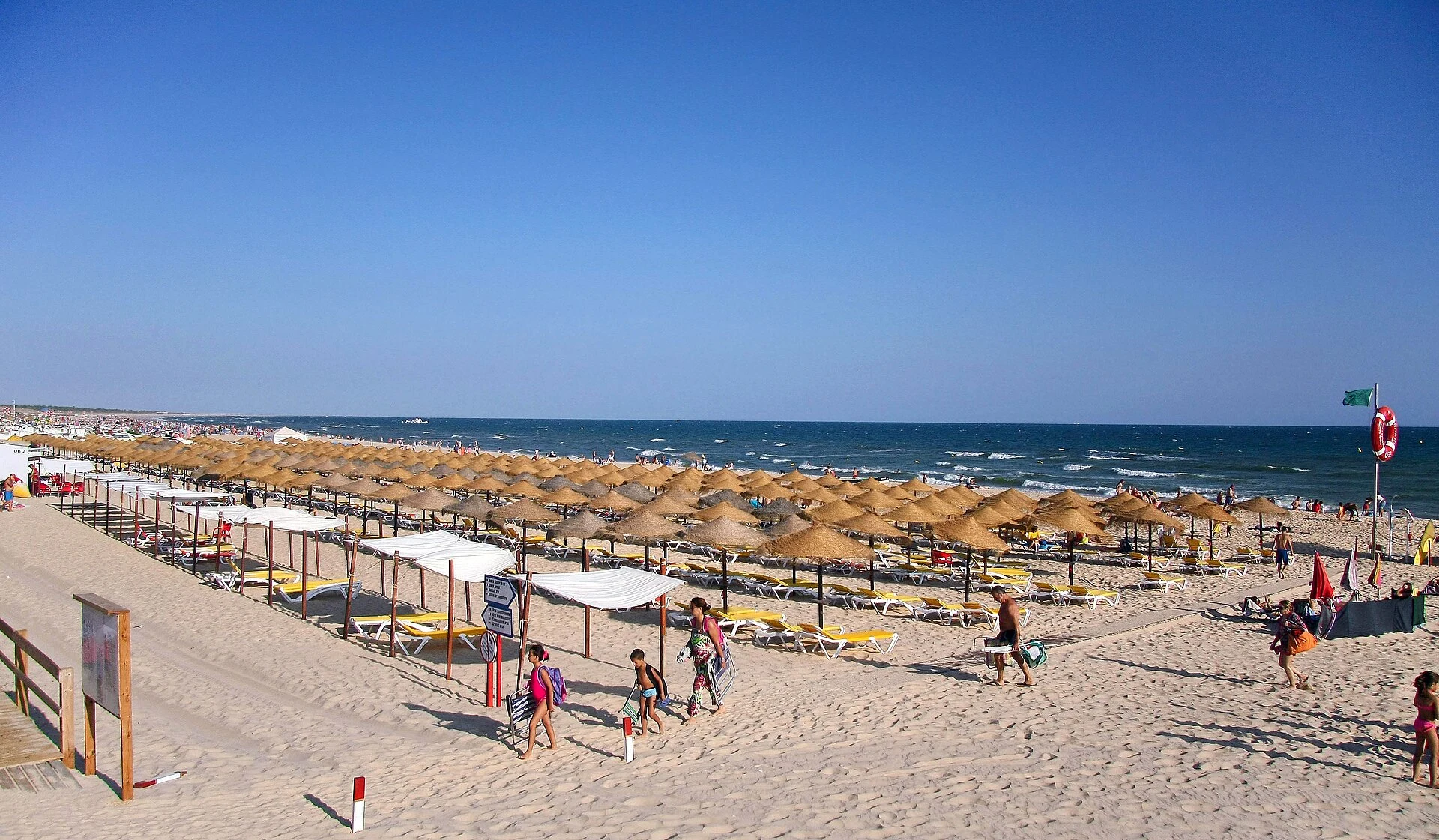
Praia de Monte Gordo is a 1.5km-long flat beach in the far eastern Algarve, about 4km from the Spanish border. It has the warmest sea water on mainland Portugal's coast, reaching 22-24°C in summer, and its shallow, gentle slope makes it one of the safest swimming beaches in the region.
Why This Beach
Praia de Monte Gordo looks nothing like the postcard Algarve. No cliffs, no sea caves, no hidden coves. Instead: a vast, flat expanse of fine golden sand stretching 1.5km, backed by dunes and a row of high-rise hotels from the 1970s and 80s. The skyline is honestly not pretty. But the beach itself is exceptional for one specific reason: the water is the warmest on mainland Portugal’s coast.
That warmth changes everything about the swimming experience. Where beaches on the central and western Algarve can feel bracing even in August, Monte Gordo’s sea sits comfortably at 22-24°C through the summer months. The water is also unusually shallow, sloping so gently that at low tide you can walk 20-30 metres out and still be knee-deep. For families with small children, these conditions are hard to beat anywhere in the region. The beach holds Blue Flag status and has done for over two decades. On the western end, colourful fishing boats still line the sand and fishermen mend nets in the sun, a remnant of what Monte Gordo was before the hotels arrived.
How to Get There
Monte Gordo is about 55 minutes from Faro Airport on the A22 motorway, or closer to 70 minutes on the toll-free N125. From Vila Real de Santo António, the beach is a 5-minute drive or a 30-minute walk along the coast.
This is one of the few Algarve beaches genuinely accessible by public transport. The train from Faro takes roughly an hour, with a dozen departures daily, and Monte Gordo station is about a 10-minute walk from the beach. The train also connects through Tavira in around 25 minutes. Driving from Spain, the beach is 4km from the border crossing at the Guadiana bridge.
Parking is free behind the dunes. The central spots closest to the promenade restaurants fill by mid-morning in August, but the beach is long enough that you can always find a space further along. The entire beachfront promenade is wheelchair-accessible, with ramps onto the sand and an amphibious beach wheelchair available during the bathing season.
What to Bring and What to Know
Bring sun protection and not much else. Monte Gordo is the most self-contained beach in the eastern Algarve: restaurants, bars, shops, toilets, and showers are all along the boardwalk within steps of the sand. Sun loungers and parasols are available for hire, though there is plenty of open sand if you bring your own setup.
The water is calm enough that you rarely need to worry about currents, but check the flag system on windy days. A windbreak (paravento) is worth packing if you plan full days here, as afternoon breezes pick up regularly. No rocks in the water means no need for water shoes, unlike the cove beaches further west. Snorkelling is pointless: the flat, sandy seabed has nothing to look at.
Sea temperatures reach their peak of around 22-24°C between July and September, warmer than anywhere else on the Algarve’s south coast. Even in June and October the water hovers around 19-21°C, extending the comfortable swimming season a few weeks beyond what you’d get at beaches near Faro or further west. Locals collect conquilhas (small Donax clams) from the shallows at low tide, buried just under the surface of the sand. Worth trying if you see others doing it.
Nearby Beaches
Praia de Cacela Velha is about 15 minutes west by car and a completely different experience: a barrier island beach reached by wading across the Ria Formosa lagoon from a clifftop hamlet. Quieter and far more scenic, it makes a good contrast to Monte Gordo’s wide-open simplicity.
Praia Verde, a few kilometres west of Monte Gordo along the same coastline, is backed by pine forest rather than hotels. Similar sand and water conditions but significantly fewer people, even in summer. No dedicated page yet, but worth the short drive if Monte Gordo’s central strip feels too built-up.
Praia de Santo António stretches east from Monte Gordo toward Vila Real de Santo António. Walk ten minutes from the main beach area and you hit near-deserted sand, with the same warm water and no facilities at all. Good for a long empty walk.
Walk east past the main beach area toward Praia de Santo António for near-empty sand within ten minutes. The fishing boat section on the western end is worth visiting early morning when the catch comes in.