Sagres is a small, wind-battered town at the southwestern tip of mainland Europe, roughly 115km west of Faro. It draws surfers, hikers, and anyone who wants the Algarve stripped of resort polish. The Fortaleza de Sagres and Cabo de São Vicente are its two historic anchors.
Why Visit Sagres
Sagres is the Algarve turned inside out. The manicured resort towns, the golf courses, the marina cocktails: none of that exists here. Instead you get a small, unpolished town on a windswept headland where the dominant forces are the Atlantic swell and the Vicentine Coast wind. The town itself is unremarkable, a handful of streets with restaurants, surf shops, and a supermarket. The landscape around it is the reason people come.
Two headlands define Sagres. The Ponta de Sagres, where the 15th-century fortress sits on cliffs 60 metres above the sea, and Cabo de São Vicente 6km to the west, the southwestern tip of mainland Europe. Between them, the coastline is raw cliff and open ocean. The surf is powerful and the light in the evening is exceptional. That sense of being at Europe’s edge is genuinely felt rather than just marketed. The crowd here reflects it: surfers, hikers, a scattering of history enthusiasts, and a growing contingent of people who tried the central Algarve and wanted something less curated.
Skip this if you want nightlife or polished resort infrastructure. Sagres does not have those things and is not trying to.
Best Things to Do in Sagres
Fortaleza de Sagres
The fortress is the Algarve’s most visited monument, and the headland location alone justifies the entrance fee. Prince Henry the Navigator established it in the 15th century as a base for the maritime expeditions that eventually led to the Portuguese Age of Discovery. Much of the original structure was destroyed in the 1755 earthquake. What survives, and what draws close to half a million visitors annually, is the dramatic position rather than the architecture.
Inside the walls, the main feature is a giant stone wind compass, 43 metres across, discovered in 1921. Its exact purpose is still debated. The small church, Igreja de Nossa Senhora da Graça, sits within the walls. But the real experience is walking the perimeter of the promontory, where three sides drop away as sheer cliff to the Atlantic. No safety barriers in many spots, which feels very Portuguese.
The fortress opens daily at 9:30am, closing at 5:30pm in winter and 8pm in summer. An evening visit for the sunset light on the cliffs is worth timing.
Cabo de São Vicente
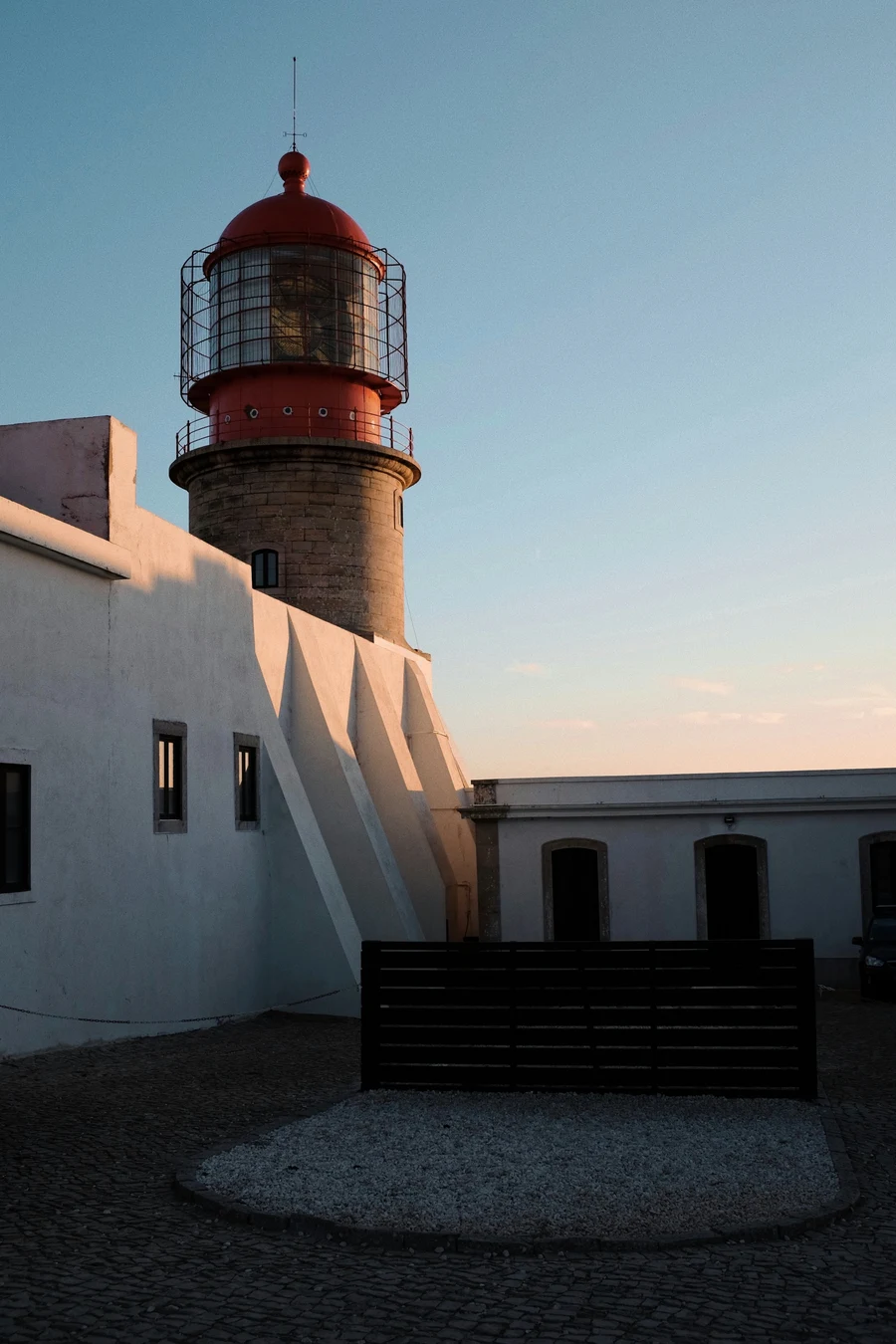
Six kilometres west. A headland of 75-metre cliffs battered by wind so constant that almost nothing grows on the exposed rock. The Romans called it Promontorium Sacrum, the sacred promontory, and believed it was the edge of the known world. The lighthouse here has one of Europe’s most powerful beams, visible up to 50km out to sea.
Most visits last about 30 minutes. There is a small museum in the lighthouse, a few souvenir stalls, and the “last bratwurst before America” food van, which has become a minor attraction in its own right. The real draw is standing at the cliff edge and staring at open ocean knowing there is nothing between you and North America.
Getting there without a car is awkward. The route 47 bus extends to the cape on a limited seasonal schedule, and on weekdays only. Check Vamus timetables in advance. Driving takes about 10 minutes from Sagres, and parking is free.
Surf Lesson at Praia do Tonel
Tonel sits directly below the fortress cliffs on the west-facing coast, which means it catches the full Atlantic swell. Several surf schools operate here from spring through autumn. Beginners get lessons in the whitewash on calmer days. The scenery while you’re in the water, fortress above, cliffs on both sides, is hard to match anywhere on the Algarve coast. The beach has a restaurant and basic facilities in summer.
Walk the Cliff Trail to the Cape
A roughly 6km path follows the cliff edge from near the fortress to Cabo de São Vicente. The trail is largely exposed, no shade, no shelter from the wind, and uneven underfoot in places. Bring water. The payoff is an uninterrupted stretch of coastline that puts you above the Atlantic with no buildings, no roads, and no one else for long stretches. Allow about 90 minutes each way at a comfortable pace.
The Fishing Harbour
Porto da Baleeira is on the sheltered eastern side of the Sagres headland. Fishing boats come and go throughout the day. It is a working harbour, not a prettified marina, and the scale is small enough to feel genuine. The harbour area is also the departure point for boat trips along the coast. A Tasca, one of the better restaurants in town, sits on the hill above.
Ermida de Nossa Senhora de Guadalupe
A small Gothic chapel about 3km northeast of town, dating to the 15th century and classified as a National Monument. Henry the Navigator is said to have prayed here. A small museum in the adjoining farmhouse covers the chapel’s history and the spice trade. It is a minor detour, best suited to visitors staying more than one day. Closed Mondays.
Best Beaches Near Sagres
Three beaches are within walking distance of the town centre, and they could hardly be more different from each other.
Praia do Tonel is the surf beach: west-facing, exposed to the Atlantic, with powerful waves and strong currents. The cliff setting is dramatic and the atmosphere is distinctly surf culture. Not a swimming beach for casual visitors.
Praia da Mareta is the town beach: south-facing, more sheltered, with calmer water and three restaurants along the back. The fortress promontory protects it from the worst of the westerly wind. Better for swimming, kayaking, and families. The best general-purpose beach in Sagres.
Praia do Martinhal, east of town, is the family option. A sheltered bay with shallow, usually calm water and a large islet offshore that creates protected conditions. The Martinhal family resort sits behind it. Good for small children. Divers explore underwater caves around the islet.
Praia do Beliche, between Sagres and the cape, is accessed by a steep staircase down the cliff. Beautiful and uncrowded, but the access makes it difficult with young children or mobility limitations. The waves can be strong.
Where to Eat in Sagres
Sagres is not a dining destination. The restaurant scene is small and heavily weighted toward grilled fish and seafood, which is fine because the fish is fresh and the prices are lower than the central Algarve.
A Tasca overlooks the fishing harbour and does the basics well: grilled fish of the day, generous portions, a terrace with views. It fills up in summer and service can vary, but the food is consistent. Adega dos Arcos is a quieter, family-run option with a short menu that changes with the catch. No frills, reasonable prices, and the kind of place where the owners remember you if you come back.
Three Little Birds, on the road toward the fortress, brings some variety: the spicy prawns are a regular recommendation, and the menu stretches beyond traditional Portuguese. Good for a second or third evening when you’ve had your fill of grilled sea bream.
For a lunch with a view, Nortada sits right on Praia da Mareta. The food is decent rather than exceptional, but eating with sand between your toes and the Atlantic in front of you compensates. Worth knowing: some of the smaller cafés and beach spots are cash-only, so carry notes.
The Hangout, in the town centre near the skatepark, serves Italian-influenced food and has become a social hub for the surf community. The pasta portions are built for post-session hunger. Fermento is a more recent addition with a seasonal menu, locally sourced ingredients, and the best wine selection in town (organic and unfiltered Portuguese wines). Harder to get a table, smaller, and a different register entirely from the harbour restaurants.
Where to Stay in Sagres
Accommodation in Sagres falls into three tiers, and the town is small enough that location matters less than it does elsewhere.
The Martinhal Sagres Beach Family Resort Hotel is the high-end option, a five-star property near Praia do Martinhal with multiple pools, restaurants, and organised children’s activities. It is the only resort-level property in Sagres and caters primarily to families. Memmo Baleeira is a four-star design hotel overlooking the harbour, with a spa, heated pool, and a more adult-oriented atmosphere. The Pousada de Sagres is a converted heritage property on the clifftop above Praia da Mareta, with fortress views from many rooms. Older in style than the Memmo, but the setting is hard to beat.
Mid-range options include boutique guesthouses and apartment rentals in and around the town centre. Mareta View is a well-regarded bed and breakfast near the beach. The town’s surf lodges and hostels fill the budget tier and give Sagres much of its social character. Expect a young, international crowd.
Book ahead for July and August. Outside peak season, availability is rarely an issue and prices drop noticeably.
How to Get to Sagres
Sagres is roughly 115km from Faro Airport, the Algarve’s main international gateway. By car, the drive takes about 1 hour 20 minutes via the A22 motorway to Lagos, then the N125 and N268 west through Vila do Bispo. The A22 uses electronic tolls (Via Verde), so arrange a toll payment method in advance or take the toll-free N125 the full distance, which adds time but passes through towns worth stopping in.
Without a car, the journey requires a connection in Lagos. From Faro, the Aerobus (route 56, operated by Vamus) runs directly to Lagos in about 2 hours, with up to six departures daily in summer and two in winter. Alternatively, the regional train from Faro to Lagos takes around 1 hour 45 minutes. From Lagos bus station, the Vamus route 47 bus runs to Sagres in about 55 minutes, with multiple daily departures that thin out in winter.
A private transfer from Faro Airport to Sagres costs roughly €100-140 depending on season and how far ahead you book.
A car is strongly recommended. Sagres is manageable without one if you stay in town, but reaching Cabo de São Vicente, the west coast beaches, and the wider Costa Vicentina is impractical on public transport alone.
Local Tips
The wind deserves its own paragraph. Sagres is windy most of the year, and violently so on some days. The headlands at the fortress and cape are fully exposed. Beach days on the west-facing Tonel can be sandblasted to the point of discomfort. South-facing Mareta is the more reliable option for sheltered conditions, and even there, bring layers. Locals dress in windbreakers while tourists shiver in shorts. Learn from the locals.
Sagres empties out dramatically in winter. Many restaurants close or reduce hours between November and March. The surf gets bigger and the town drops to a skeleton crew of residents and committed surfers. If you visit off-season, check opening hours before walking anywhere with a specific plan.
The “last bratwurst before America” van at Cabo de São Vicente is a better photo opportunity than a meal, but the novelty factor draws a crowd. For an actual sunset viewing spot, the fortress promontory is better: less crowded than the cape, equally dramatic, and you can walk back to town for dinner.
Cabo de São Vicente after dark is one of the few places in the Algarve with virtually zero light pollution. On a clear night, the stars are visible in a way that the coastal towns have long since lost.
The wind is the defining feature of Sagres and most visitors underestimate it. Even on a hot day, the exposed headlands at the fortress and cape can be uncomfortably breezy. Bring a windbreaker, and if you're planning a beach day, choose Praia da Mareta (south-facing, more sheltered) over Tonel unless you're surfing.