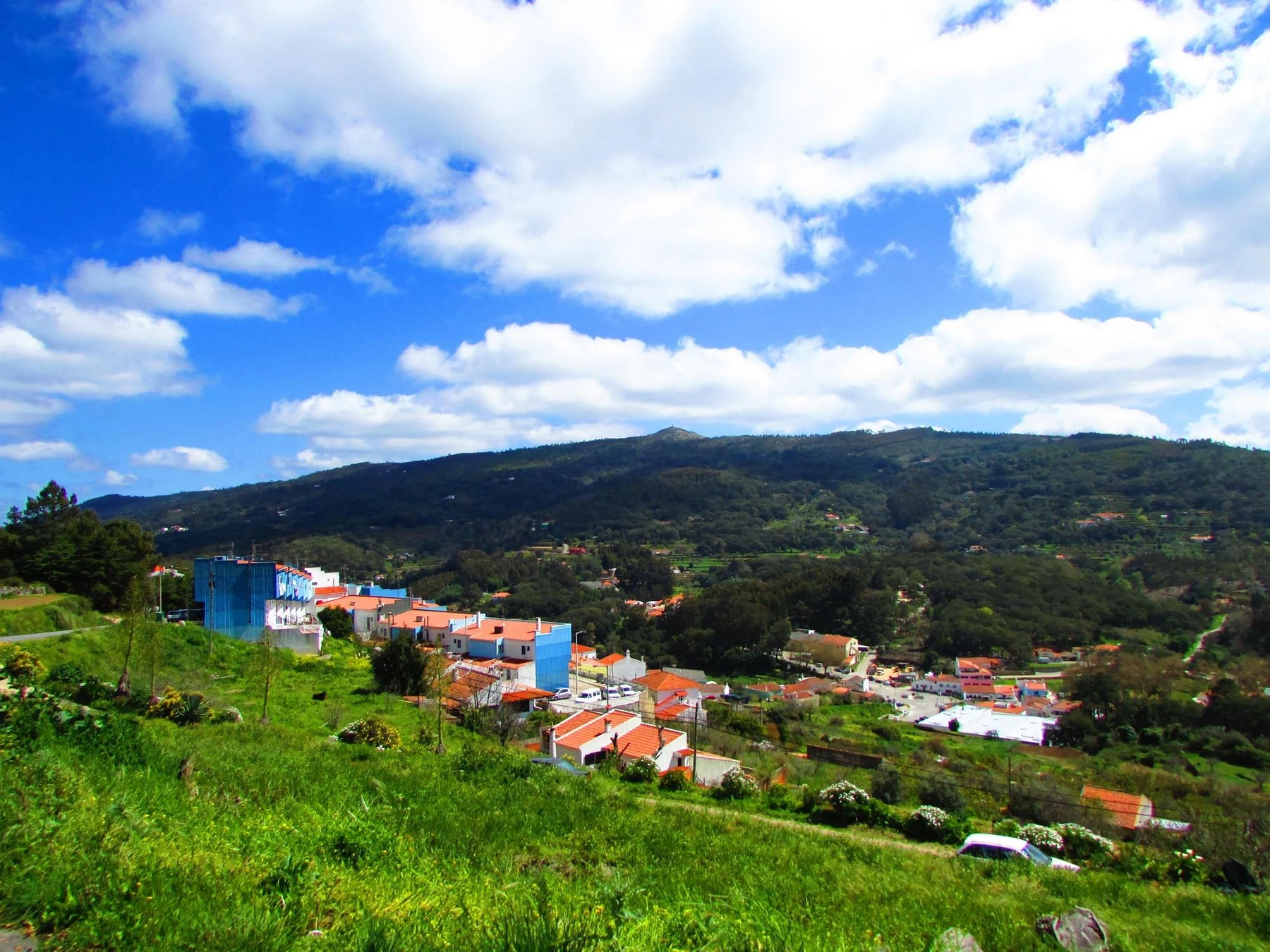
Monchique is a small mountain town in the western Algarve interior, set at around 450 metres altitude in the Serra de Monchique. The town serves as a base for reaching Fóia (902m), the Algarve's highest point, and the Roman-era thermal springs at Caldas de Monchique. It is known for medronho (arbutus berry spirit), black pork, and chestnut forests.
Why Visit Monchique
Monchique is what happens when the Algarve forgets it’s supposed to be a beach destination. Set at around 450 metres in the Serra de Monchique, this small town trades coastline for forest, sand for cobblestones, and grilled fish for slow-cooked black pork. The air is cooler. The restaurants are cheaper. The tourists are fewer. And if you’ve spent a week on the coast wondering whether there’s more to the Algarve than sunbeds, the answer is about 30 minutes up the hill from Portimão.
The town itself is small and not especially pretty in the conventional sense. The appeal is what surrounds it: Fóia, the Algarve’s highest peak at 902m, with views on clear days from Cabo de São Vicente to Faro. The Roman-era thermal springs at Caldas de Monchique, tucked into a forested valley 6km below. Hiking trails through cork oak and chestnut forests where you can walk for an hour without seeing another person. The local economy runs on medronho (a spirit distilled from arbutus berries that could strip paint), presunto from black pigs raised on acorns, and honey. None of this is manufactured for visitors. Monchique has been producing these things long before anyone thought to write a travel guide about them.
Best Things to Do in Monchique
Drive or Hike to Fóia
Fóia is the headline. At 902 metres, it is the highest point in the Algarve, and on a clear day the panorama extends across the entire southern coast and west to Cape Saint Vincent. The drive up via the N266-3 takes about 15 minutes from Monchique through a series of hairpin bends, the vegetation shifting from citrus groves to eucalyptus to wind-stunted scrub as you climb. There’s a car park at the top, a café, and a couple of souvenir shops. Also a cluster of telecommunications towers, which slightly undermines the wilderness aesthetic.
The better approach is on foot. A section of the Via Algarviana long-distance trail passes through the serra, and the hike from Monchique to Fóia covers about 6km each way. Allow five to six hours for the return trip if you stop at viewpoints, which you will. Check visibility before setting out: cloud cover at the summit is common, especially in winter, and there’s nothing to see in fog.
Caldas de Monchique
A small spa village in a lush valley south of Monchique, Caldas has drawn people to its thermal waters since the Roman period. The spring water surfaces at a constant 32°C with a pH of 9.5, making it one of the most alkaline in Portugal. (You can also buy it bottled in every Algarve supermarket.)
The modern spa resort offers hydrotherapy circuits, massage treatments, and thermal pools. Beyond the spa, the village itself is worth an hour’s wander: a small square shaded by old trees, woodland walking paths along a series of cascading water features, and a few cafés where the main activity is doing very little. The architecture is an eclectic mix of restored 19th-century buildings and less restored everything else. On a weekday outside peak season, the quiet borders on meditative.
Hike to Picota
Fóia gets the attention, but Picota (774m) is the better walk. The second-highest peak in the Serra, it’s accessible via an 11km loop trail from Monchique that passes through cork oak and chestnut forests with views down to the coast. The path is moderately challenging with a total elevation gain of around 490 metres. At the summit there is a fire watchtower, no café, no shops, and no other development. Just a 360-degree panorama and quiet.
The trail is generally well marked with blue paint on rocks and trees, though it can become faint in places. Allow three to four hours for the loop. The contrast with Fóia is stark: where Fóia has a car park and tourists, Picota has solitude. (Bring water. There’s nothing at the top.)
Igreja Matriz de Monchique
The town’s 16th-century parish church is small but architecturally interesting, with a Manueline doorway featuring twisted columns and rope-knot carvings that reference maritime themes, an unusual choice for a mountain town. Inside, the 18th-century figurative tiles and a carved Baroque altarpiece are worth a few minutes. The attached small museum houses religious objects, some recovered from the ruined Convento de Nossa Senhora do Desterro up the hill. Free entry.
Parque da Mina
Located near Caldas de Monchique, this heritage park is built around an old iron ore mine. The main draw is the medronho distillery, where you can see (and taste) the production process for the Algarve’s most notorious spirit. The park also includes a restored 18th-century manor house, nature trails through the surrounding woods, and a small farm with animals. It works particularly well for families with children, and the demonstrations of traditional crafts give it more substance than a typical tourist attraction.
Explore the Old Town
Monchique’s cobbled streets climb steeply from the main square, Largo 5 de Outubro, past whitewashed houses with the distinctive Algarve chimney pots and occasional bursts of bougainvillea. The pedestrian Rua do Porto Fundo, connecting the main square to the church above, is lined with small shops selling local products: medronho, honey, cork items, and the traditional folding scissor chairs made from chestnut wood that Monchique has produced for generations. A Monday market brings local farmers to town. The scale is small. Twenty minutes covers most of it, but that’s part of the charm.
Nearest Beaches
Monchique has no beach of its own. The coast is about 20 to 30 minutes’ drive south.
Praia da Rocha is the closest large beach, a wide stretch of sand below dramatic sandstone cliffs in Portimão. It’s the most convenient option but gets very busy in summer.
Praia de Alvor offers a long, quieter beach with a boardwalk approach through the Ria de Alvor estuary. Good for families wanting calmer water and fewer crowds than Praia da Rocha.
The beaches around Carvoeiro, including Praia da Marinha and Praia de Benagil, are about 40 minutes’ drive but worth it for the scenery.
Where to Eat in Monchique
The food in Monchique is some of the best value in the Algarve, and the style is different from the coast. Forget grilled fish: this is mountain food. Black pork (porco preto), raised on acorns in the surrounding hills, appears on almost every menu. Wild boar stew, cabrito (kid goat), chouriço, and presunto are the staples. Portions are enormous by coastal standards, and splitting a main course between two is common and accepted.
Restaurante Luar da Fóia, up the Fóia road above town, has been operating for over three decades and serves the definitive mountain menu: wild boar with chestnuts, black pork cooked Monchique-style, and a view that stretches to the coast on clear evenings. The mushrooms in honey and port deserve their reputation as the standout starter.
Jardim das Oliveiras, also off the Fóia road, has a big shaded terrace under olive trees and serves properly traditional food. The black pork and lamb chops bring people up from the coast specifically to eat here. Portions are generous enough that half-portions exist for good reason.
A Charrete in the town centre does excellent grilled chicken piri-piri over charcoal. It’s basic, inexpensive, and exactly the kind of place you want after a morning’s hiking. The sauce is genuinely spicy.
At Caldas de Monchique, Foz do Banho is a small tapas bar in a centuries-old building on the village square. Petiscos, wine, and the sound of thermal water. Not a full meal, but the right place for a leisurely stop.
One thing to know about Monchique restaurants: the presunto here is excellent and almost every restaurant serves it as a starter. If you’re going to try Algarve cured ham, this is the place. The black pigs of the serra produce some of the best in the region.
Where to Stay in Monchique
Most visitors treat Monchique as a day trip from the coast, and that works. But staying overnight changes the experience. The town empties after the day-trippers leave, the restaurants feel more local, and an evening on a Fóia-road terrace watching the sun set over the coast is hard to replicate elsewhere.
The Monchique Resort and Spa is the largest property, a modern resort set in the hills with spa facilities, pools, and mountain views. It’s comfortable and well-run, though the resort setting feels detached from the town. The thermal spa hotels at Caldas de Monchique, including the Villa Termal properties, offer a different experience: smaller, more atmospheric, and built around the historic spa infrastructure. Some of the buildings show their age.
For something more personal, several rural quintas and guesthouses operate in and around Monchique. These tend to offer the best value, often with pools and kitchens, and put you closer to the landscape. Prices across all categories are significantly lower than the coast, and availability is rarely a problem outside August.
How to Get to Monchique
Monchique is about 55 minutes from Faro Airport. Take the A22 motorway westbound and exit at junction 5 towards Portimão and Monchique, then follow the EN266 north. The road climbs steadily through increasingly dense forest, with several hairpin sections above Caldas de Monchique. It’s an easy drive but requires attention on the bends.
From Portimão, the drive takes about 25 minutes. From Silves, about 30 minutes via the EN124 and then the EN266. From Lagos, around 40 minutes.
A bus service connects Portimão to Monchique, running primarily on weekdays. The journey takes roughly 45 minutes. Weekend services are limited, and no buses run to Fóia or Caldas de Monchique from the town. There is no train station. Realistically, Monchique is a car destination. Without one, you’ll see the town but miss the serra.
Parking in Monchique is free in most areas. The main car parks near the central square and the miradouro above town handle day-trip volume comfortably. Caldas de Monchique has a smaller free car park that fills faster in summer.
Local Tips
The temperature difference between Monchique and the coast is real and reliable. In peak summer, when coastal towns push past 30°C, Monchique sits around 25 to 27°C. In winter, though, the altitude works against you: mornings can be genuinely cold, and fog settles into the valleys. Bring a layer you won’t need on the coast.
The Monday market in the main square is small but worth timing a visit around if you’re in the area. Local farmers sell fruit, vegetables, honey, and chestnut products. For medronho, the shops along Rua do Porto Fundo stock bottles from local producers, but the experience is better if you visit the distillery at Parque da Mina and taste before buying. (Taste carefully. Medronho is typically 45 to 50% alcohol.)
The bolo de tacho, a dense dark cake made with cornflour, honey, coffee, and cacao, is Monchique’s contribution to the pastry world. Pick one up at the bakeries near the main square. It travels well and makes a better souvenir than most things you’ll find in Algarve tourist shops.
If you’re planning to combine Monchique with a visit to Caldas de Monchique and a drive to Fóia, that’s a comfortable half-day. Add lunch at one of the restaurants on the Fóia road, and it becomes a full day that feels like a different country from the beach holiday happening 30 minutes to the south.
Monchique sits 5 to 8°C cooler than the coast in summer. When Albufeira hits 35°C, Monchique is a comfortable 27°C. Bring a light layer for the evening, especially if eating on a terrace up the Fóia road.